You booked the videographer, paid the second deposit, and now the contract has a line that reads: “one 5-8 minute highlight film plus full ceremony.” Is that enough? Too much? You won’t really know until eight weeks after the wedding, when the file lands in your inbox and you finally sit down to watch. So let’s settle the question before you sign.
How long should a wedding video be depends less on some industry standard and more on three things: who watches it, how often, and on what screen. A 32-minute documentary edit and a 90-second teaser are not competing products. They answer different needs. Couples tend to assume longer means more value. In practice, the films people rewatch most are almost always the shortest ones.
The four standard wedding video lengths
Most professional videographers deliver some mix of four formats. Some studios bundle all four, others sell them à la carte, so the names matter when you’re comparing two quotes side by side. Knowing them saves you a confusing email thread later.
The teaser runs 45 to 90 seconds. It’s cut fast, scored to one song, and built for Instagram or the group chat the week after. The highlight film is the centerpiece of most packages. It runs 3 to 8 minutes and tells the arc of the day: vows audio, speeches, the big emotional beats. The feature film, sometimes called the extended edit, runs 15 to 40 minutes. It folds in more of the ceremony and reception, full toasts, and longer dance sequences. The documentary edits are near-raw, lightly cut coverage. You get the ceremony, all the speeches, sometimes the first dance, often 20 to 90 minutes spread across several files.
A typical mid-range package in 2026 runs $3,500 to $5,500. That buys you a teaser, a 5-to-7-minute highlight, and full ceremony and speech coverage. Budget packages under $2,500 often stop at the highlight film alone. The feature film is usually a $600 to $1,200 add-on. It’s a separate edit pass, not just “more of the same footage,” and that line item is where cheap quotes hide expensive surprises.
Why the highlight film is the one that matters
If you only get one deliverable right, make it the highlight film. And resist the urge to make it long. There’s a real falloff in how often people watch a wedding video once it stretches past about seven minutes. A 4-minute film gets rewatched on anniversaries, shown to coworkers, played at the parents’ house. A 22-minute film gets watched once, the week it arrives, and then maybe never again front to back.
That’s not a knock on the longer edit. It’s just how attention works on the screens we actually use. The highlight film has to survive on a phone. It autoplays with the sound off for the first three seconds. It has to hold someone who wasn’t at your wedding and has no emotional stake yet. Length is the enemy of that job.
The best videographers know this. A lot of them cap their highlight films around 5 minutes by default and charge extra to go longer. If your editor is pushing a 12-minute “highlight,” ask to see two or three examples at that length first. Watch them all the way through. If you check your phone halfway, that’s your answer. I’ve watched couples fight for a 10-minute cut, then admit a year later that the only thing they ever actually send people is the 90-second teaser. You can compare different editing styles by browsing wedding videographers and seeing how each one paces a sample film.
How long is the ceremony footage, really
This is where couples get surprised. Your ceremony might run 25 minutes in real life, so you’d assume the “full ceremony” deliverable is 25 minutes. Usually it is, give or take. But it depends entirely on how the videographer covered it.
A single-camera shooter has to cut to hide the moments they panned or refocused. So the ceremony edit often runs a touch shorter than the live event, with a few clean transitions. A two or three-camera setup can deliver a near-continuous edit that matches real time. It cuts between the wide angle, the tight shot on the couple, and the reverse on the guests. That multi-cam continuous ceremony is one of the best reasons to ask about a second shooter. It’s worth understanding what a second videographer adds to coverage before you decide.
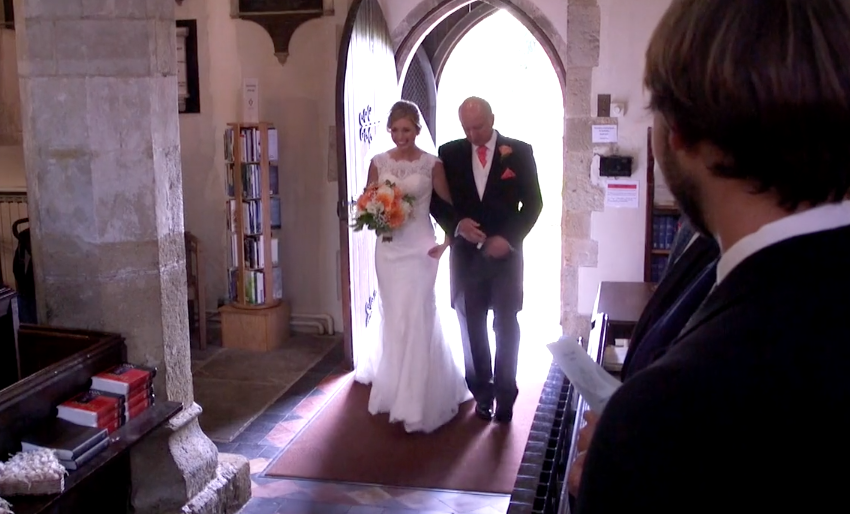
Religious and cultural ceremonies change the math a lot. A Catholic Mass can run 60 minutes. A Hindu ceremony can stretch two to three hours across multiple rituals. A Jewish ceremony with the full ketubah signing and the breaking of the glass has natural chapters built in. If your ceremony is long or has distinct ritual segments, tell your videographer early. It affects crew size, card storage, battery count, and how they structure the deliverable. A three-hour ceremony filmed by one person, on one Sony FX3 with a single battery and a 256GB card, is a recipe for missed moments. Pros run a backup body like a Sony a7S III and swap cards between segments.
Teasers, social cuts, and vertical video in 2026
The teaser has quietly become one of the most requested deliverables, and the reason is platform-driven. Couples want something to post within a week, while the wedding is still fresh in everyone’s feed. The 8-week-later highlight film can’t do that. A fast-turnaround 60-second teaser, often promised within 5 to 10 business days, scratches the itch.
More videographers now offer a vertical cut built for Reels, TikTok, and Stories, framed 9:16 instead of the cinematic 16:9. This is not free to produce. Reframing a horizontal shoot for vertical means re-cropping every shot, sometimes regrading, and re-cutting to a tighter rhythm. Expect a $150 to $400 add-on rather than a freebie. If a social cut matters to you, say so before the shoot. A videographer who knows you want vertical will compose some shots with headroom for the crop.
A few things worth confirming with your editor about short-form deliverables:
- Whether the teaser uses music licensed and cleared for social platforms, since unlicensed tracks get muted or pulled
- Whether the vertical cut is a separate export or just a reframe of the horizontal
- How fast the teaser actually turns around, in business days, in writing
On music specifically, the platform’s automated systems flag copyrighted audio, and a gorgeous teaser scored to a popular song can get silenced the second you upload it. Reputable studios license tracks from catalogs built for exactly this, like Musicbed, Artlist, or Soundstripe, where a single wedding-film license runs roughly $50 to $200 a track. It’s worth reading up on how wedding video music gets licensed so you understand why your videographer won’t just drop your favorite Taylor Swift song over the vows.
Does a longer video cost more?
Yes, but not the way most people assume. The shooting day costs roughly the same whether you end up with a 3-minute film or a 30-minute one. The crew is there for the same eight or ten hours either way. The cost difference is almost entirely editing labor.
Here’s the rough math from the editor’s chair. A polished 5-minute highlight can take 15 to 25 hours to cut, color, and mix in something like DaVinci Resolve or Adobe Premiere Pro, because every second is deliberate. A 30-minute feature doesn’t take six times longer, but it adds real hours: more footage to log, more speeches to sync and clean in a tool like iZotope RX, more music to license and edit around. That’s why the feature add-on lands in the $600 to $1,200 range instead of doubling your total. Documentary-style raw edits are cheaper per minute, since they involve less creative cutting. Some studios include them at no charge.
If you’re weighing where to spend, put the money on quality over runtime. Most couples overspend on minutes and underspend on sound. A tight 4-minute film with clean audio off a DJI Mic 2 or a Rode lav, proper color, and well-licensed music beats 25 minutes of loosely assembled clips. For a fuller breakdown of what drives the total, the wedding videography pricing guide covers how packages get built and where the add-ons stack up.
How long until the video lands in your inbox
Runtime is only half the waiting game. Turnaround is the other half, and it’s the number couples forget to ask about. Most studios quote 8 to 12 weeks for a full delivery in 2026, with the teaser landing first, often inside two weeks.
Why so long? A wedding editor is usually juggling a queue. Your file sits behind the three couples who married before you. The actual edit is days of work, but the calendar wait is mostly queue position. Peak season, roughly May through October, stretches it. A January wedding often comes back faster than a September one.
You can pay to jump the line. A rush fee, commonly $300 to $600, moves you to the front and shortens delivery to two or three weeks. It’s worth it if you have a reason, like a grandparent in poor health who wants to see it soon. Otherwise, the standard queue is fine and you shouldn’t pay to skip it.
Get the turnaround written in as a hard date, not a vague window. “Delivered within 10 weeks” is enforceable. “When it’s ready” is not. Confirm the teaser timeline separately too, since that’s the deliverable you’ll want while the photos are still circulating.
How long should a wedding video be for your wedding type
The right runtime is a function of your day, not a fixed rule. Here’s how it tends to shake out across common scenarios.
An intimate elopement or courthouse wedding, maybe 10 to 20 guests, often suits a single 3-to-4-minute film and nothing else. There isn’t enough event to justify a feature edit. A teaser plus highlight covers it beautifully. A standard 100-to-150-guest wedding is the sweet spot for the classic package: teaser, 5-to-7-minute highlight, full ceremony, full speeches. That’s the setup most couples are happiest with a year later.
A large multi-day celebration is a different story. A destination wedding with welcome events, or a cultural wedding spanning several ceremonies, is where a feature film genuinely earns its place. You’ve flown 80 people across the world and spent three days celebrating. A 4-minute highlight can feel like it leaves the story on the table. A 20-to-30-minute feature gives the weekend room to breathe. If you’re planning at that scale, look closely at coverage hours and crew size, not just edit length. The how it works page walks through how booking and deliverables get scoped.
One more practical note. Ask for the deliverables list in writing, with each item’s target runtime and turnaround in business days. Spell out the revisions too. A standard contract gives you one or two rounds of changes on the highlight film. Ask whether a music swap counts as a revision, and what extra rounds cost, usually $75 to $150 each. “Highlight film” without a length is an argument waiting to happen. “One 5-to-7 minute highlight film, delivered within 8 weeks” is a contract you can hold someone to.
What about the full, unedited footage
Some couples want everything: every clip the cameras recorded, on the theory that they paid for it, so they should keep it. That’s a separate conversation from edit length. Most videographers either decline or charge a meaningful fee. Raw footage is unflattering, unstabilized, and full of dead time and false starts they don’t want representing their work.
If you genuinely want the archive, negotiate it before signing. Agree on a delivery format and a drive, ideally a 1TB SSD like a Samsung T7 the studio bills at cost, and accept that raw footage is not a watchable film. It’s insurance and nostalgia, not something you’ll enjoy on a Sunday night. The documentary-style ceremony and speech edits exist precisely to give you the “keep everything important” feeling, without handing over 400GB of unusable clips.
So how long should a wedding video be? Short enough that you reach for it again, long enough to hold the parts that mattered. Before you sign, decide which one or two films you’ll actually rewatch. Write the target runtimes into the contract. Put the rest of your budget into audio and color rather than minutes. A short film you watch every anniversary beats a long one you opened once.