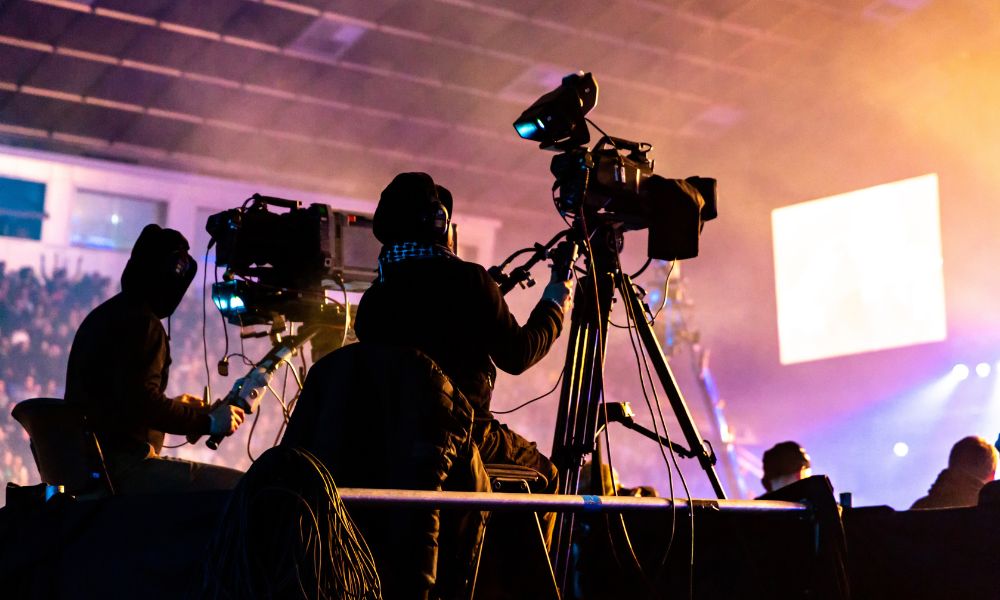
A wedding planner emails you eleven days before the shoot: “Can you send a certificate of insurance listing the venue as additional insured, $1 million per occurrence, by Friday?” If you already carry a policy, that is a five-minute forward to your broker. If you don’t, you are now scrambling to buy coverage in a hurry. Plenty of insurers will not bind a policy and issue a clean certificate that fast. Videographer insurance is the quiet difference between a routine request and a booking that slips away.
This guide is for the working shooter, not the hobbyist. It covers what each policy actually does, what it costs in 2026, and the few situations where you genuinely need more than the basics. If you are still building your client base, you can list your services and start taking bookings first and layer coverage on as the jobs get bigger. Most venues will force the question sooner than you expect.
Why clients and venues ask for a certificate of insurance
Most hotels, country clubs, corporate offices, and managed event spaces require every vendor on site to carry general liability insurance. They want proof on paper, too: a certificate of insurance, usually shortened to COI. The certificate is a one-page document from your insurer that confirms your policy is active, lists the limits, and often names the venue as an “additional insured” for that date. That last phrase matters more than it looks. When a venue asks to be added as additional insured, they are asking your policy to defend them too if something goes wrong while you are working in their building.
The reason is pure risk-shifting. The venue would rather your insurer pay than theirs, so they push the exposure onto every vendor who walks through the loading dock. Here is what actually shows up in those requests:
- A named limit, usually $1 million per occurrence and $2 million aggregate.
- The venue, and sometimes the planner, listed as additional insured for the event date.
- A delivery deadline, often inside a week, occasionally same day.
Some convention centers and large corporate campuses want $2 million per occurrence, and a handful of strict venues require your insurer to send the COI directly rather than letting you forward it. None of this is unusual. Honestly, the deadline is the part that bites people, not the cost. If you shoot weddings or events at real venues, you will be asked for a COI, probably more than once a season, and the request almost always lands with a tight turnaround.
General liability: the coverage you actually use
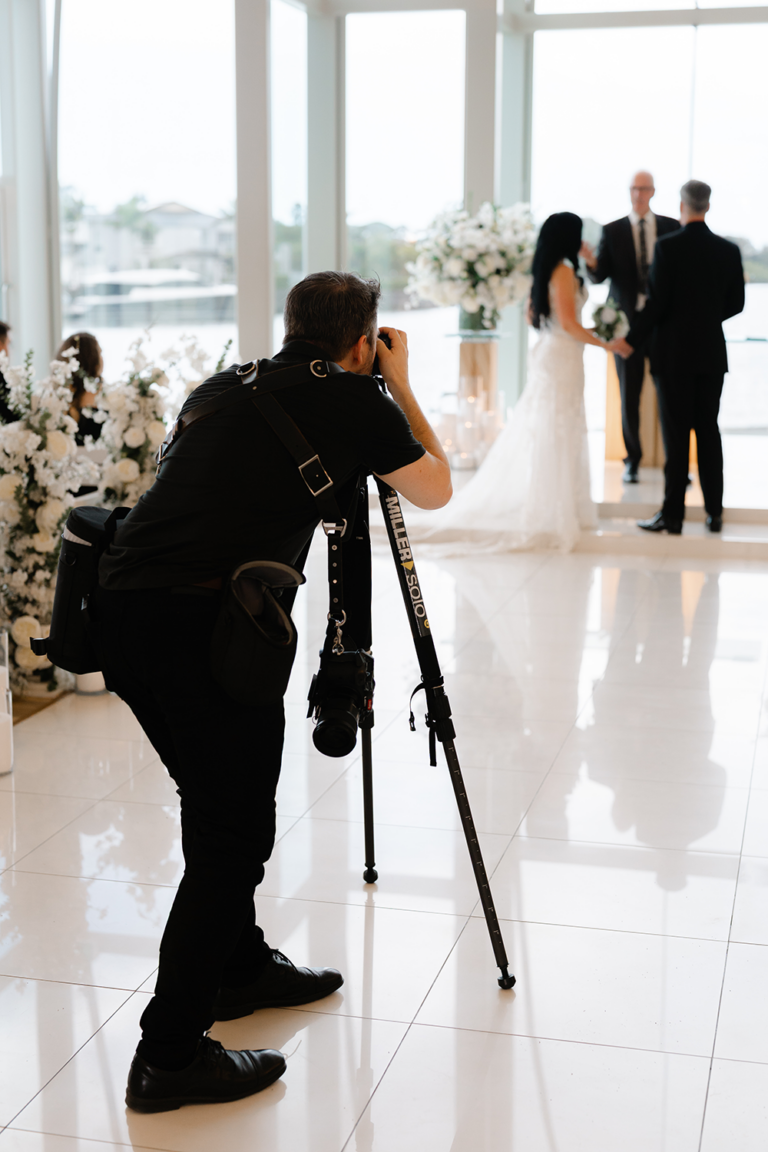
General liability, or GL, covers third-party bodily injury and property damage that you cause while working. It is the policy the COI refers to. Think about the ways a video crew can hurt someone or break something that isn’t theirs. A light stand tips over during cocktail hour and cracks a guest’s tooth. A cable you taped across a hallway catches someone’s heel, and they go down hard on a sprained wrist. Or you pivot with the gimbal and clip a $4,000 vase clean off its plinth. GL is what pays the claim and the legal defense when any of that happens.
What GL does not do is cover your own gear. If your camera falls in that same incident, that is a separate policy, which we will get to in a moment. For a solo videographer, a standard $1 million / $2 million GL policy runs roughly $350 to $700 a year, or about $40 to $60 a month if you bundle it. Annual coverage is almost always cheaper per day than on-demand if you shoot more than a handful of jobs a year. Book one or two paid gigs a month and the math tilts hard toward an annual policy. It also makes you look like a real business when a corporate client runs your paperwork.
One thing worth saying plainly: GL is the cheapest peace of mind you will ever buy in this trade. Most shooters I know carry it not because they expect a lawsuit, but because the venue won’t let them past the loading dock without it. The $1M/$2M limit became the default precisely because that is what the contracts ask for, so there is rarely a reason to buy less. Buying more, on the other hand, is a conversation for the umbrella section below.
Covering your gear: inland marine and equipment policies
Your camera body, lenses, lights, audio, drone, and editing machine are your livelihood, and general liability ignores all of it. The policy that protects your equipment is usually written as “inland marine,” an old insurance term for property that moves around rather than sitting in one building. You can buy it standalone or bundle it into a Business Owner’s Policy alongside your GL.
Two details decide whether the coverage is worth anything. The first is replacement cost versus actual cash value. Replacement cost pays what a new equivalent body costs today. Actual cash value pays the depreciated price, which on a three-year-old camera might be half of what you paid. Pay the small extra premium for replacement cost every time. The second is scheduled versus blanket coverage. A scheduled policy lists each item by serial number and value. A blanket policy covers everything up to a total limit without an itemized list. Blanket is easier to manage and fine for most kits. Schedule the expensive pieces only if your insurer insists.
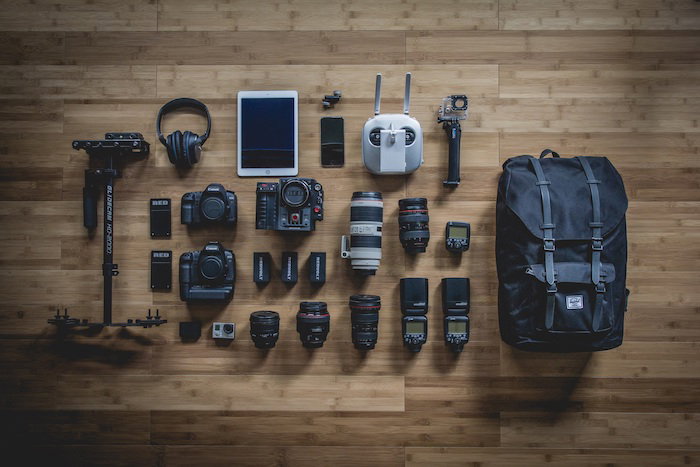
Premiums typically run 1 to 3 percent of your kit’s total value per year. Insure a $20,000 setup, say a Sony FX3 with a 24-70mm GM, a couple of fast primes, a DJI RS 4 gimbal, lights, a wireless audio kit, and a laptop, and you are looking at roughly $300 to $600 annually. Watch the deductible while you are at it, because a policy with a $1,000 deductible does nothing for you the day a $1,400 lens hits the floor. And make sure the policy includes rented and borrowed equipment. The day you rent a $6,000 cine lens for a brand shoot is exactly the day it gets dropped.
Drone work changes the math
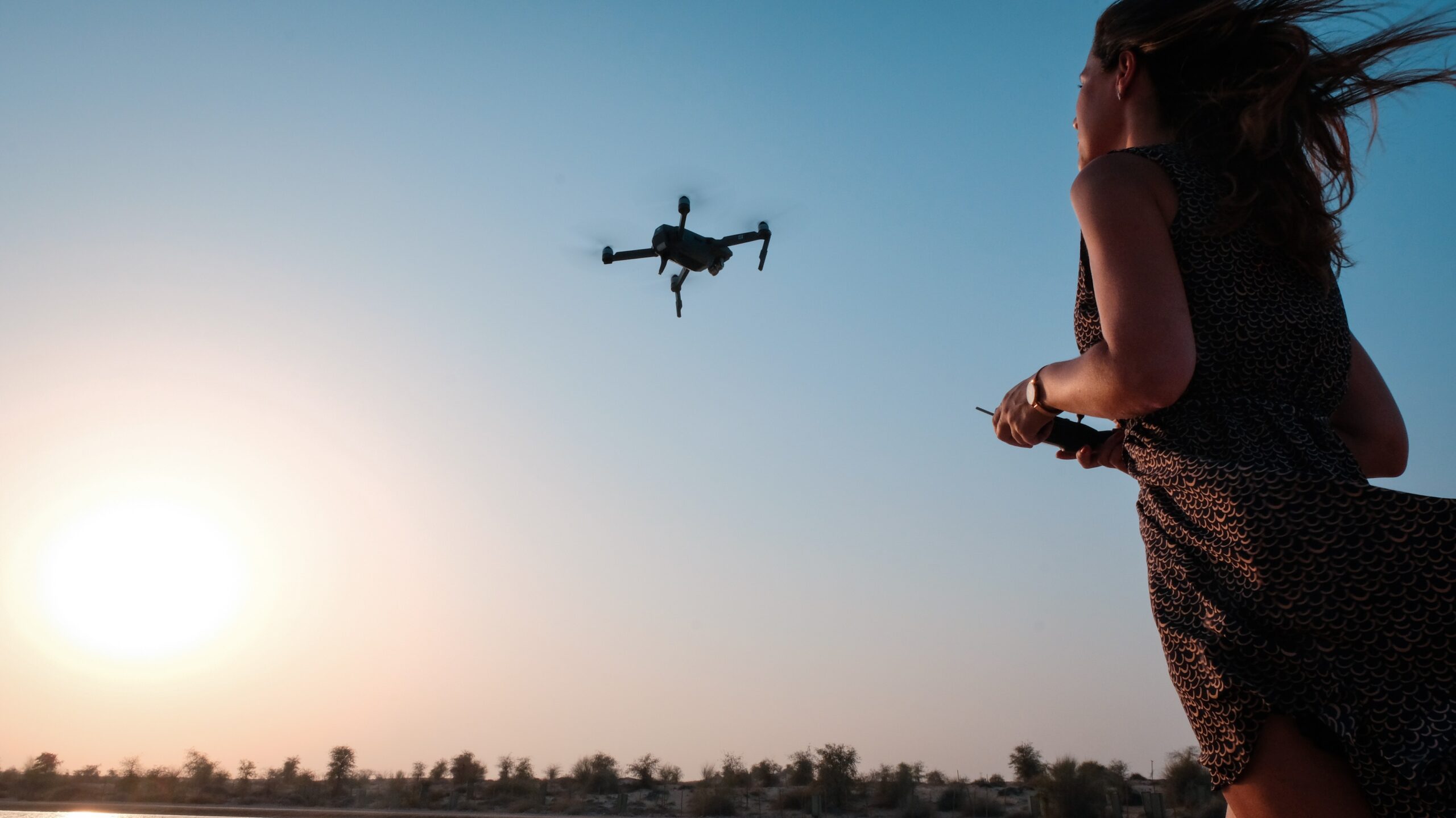
Aerial work is where a lot of videographers accidentally fly uninsured. Standard general liability policies almost always exclude aircraft, and the FAA treats a drone as an aircraft the moment you fly commercially under Part 107 commercial drone rules. So your $1 million GL policy probably does nothing if your drone clips a roofline or comes down in a parking lot full of cars. You need dedicated drone liability coverage, and your equipment policy has to specifically include the aircraft itself, because the same aircraft exclusion that voids your GL can quietly void your gear coverage too.
You have two reasonable paths. An annual drone liability policy runs about $750 to $1,500 for $1 million in coverage, which makes sense if aerial is a regular part of your work. Or you buy on-demand coverage by the hour or day through apps like SkyWatch or Thimble, often $10 to $25 per hour of flight. That suits the videographer who flies a few times a quarter and would rather not carry a standing premium.
If you are pitching yourself as an aerial and drone specialist, carry the annual policy and stop thinking about it. Clients in that niche expect a current Part 107 certificate and proof of aviation liability before you leave the ground. Many commercial sites, refineries, stadiums, anywhere with real exposure, will not let you launch without both, and a project manager who has to chase your paperwork on shoot day is a project manager who books someone else next time.
What videographer insurance costs in 2026
Here is the realistic picture of what videographer insurance costs for a solo operator pulling everything together. A standalone $1M/$2M general liability policy lands around $350 to $700 a year. Add equipment coverage for a typical $15,000 to $25,000 kit and you tack on another $250 to $600. Bundle both into a Business Owner’s Policy and many carriers price the pair at $500 to $1,200 a year, usually cheaper than buying each line separately.
On-demand coverage is the other model. Thimble and similar providers sell GL by the hour, the day, or the month. Hourly rates often land in the $10 to $25 range, with monthly plans around $40 to $60. The tradeoff is real. Per-job coverage is flexible and great in your first year, but if you are shooting two or three jobs a month, an annual policy almost always wins on total cost. It also saves you from buying a panic policy the night before a wedding shoot.
Roughly, here is what a working videographer insurance stack runs per year in 2026:
- General liability ($1M/$2M): $350 to $700.
- Equipment coverage on a $15K to $25K kit: $250 to $600.
- Occasional drone liability: $750 to $1,500 annual, or $10 to $25 per flight hour.
Budget your full videographer insurance stack at somewhere between $700 and $2,000 a year, depending on kit value and how much you fly. That is roughly where most clients assume a real vendor already sits, and coming in far under usually means there is a gap somewhere you have not noticed yet.
Beyond liability: E&O, workers’ comp, and umbrella
Three extra policies matter once the jobs get bigger, and you can skip them until they do. Professional liability, also called errors and omissions or E&O, covers you when you fail to deliver the work itself rather than break something physical. The classic nightmare is a corrupted card that loses the ceremony. Or you miss the first kiss because your second body died, and the client sues for the cost of the day. E&O runs roughly $500 to $900 a year. For anyone shooting irreplaceable events, it is worth serious thought rather than a maybe-next-year line item.
Workers’ compensation enters the picture the moment you hire help as employees rather than contractors. Rules vary sharply by state, and some require coverage as soon as you have a single employee, so check your local threshold before you bring on a regular second shooter. The IRS rules on contractor versus employee status are worth reading first, because misclassifying that second shooter as a contractor is its own expensive problem that has nothing to do with insurance.
An umbrella policy sits on top of your GL and bumps your effective limit higher. You will occasionally need it when a large corporate or event client demands $5 million in coverage that your base policy can’t reach. Most videographers never touch workers’ comp or an umbrella. Just know they exist so you are not blindsided when a contract names them and the shoot is a week out.
Getting set up without overpaying
You can buy direct or through a broker who knows the photo and video trade. Specialty providers like Hill & Usher’s Package Choice, Full Frame Insurance, and Thimble are built for shooters and tend to understand a COI request without a long explanation. If you belong to Professional Photographers of America, membership includes a baseline of equipment coverage that can supplement a thin policy. A broker usually costs you nothing extra, since the carrier pays them, and they earn their keep the first time a venue sends weird additional-insured wording at 9 p.m.
Three things to confirm before you pay. Ask how fast the insurer issues certificates and whether you can generate your own COI from a dashboard, because same-day turnaround is the whole point. Read the exclusions next, especially anything about aircraft, rented gear, or claims outside your home state. And resist the urge to over-insure. A $2 million umbrella and an E&O policy stacked on top of GL is overkill if you shoot four backyard weddings a summer.
If you want to compare how other shooters structure their coverage and budgets, the guides on our blog walk through real kit lists and pricing. Match the coverage to the work you actually book, not the work you hope to land next year. The practical next step is small. Get a written GL quote this week, confirm the certificate turnaround time, and save a blank COI template you can fill in the next time a venue asks. Carrying videographer insurance is not the exciting part of the craft, but it is the line item that keeps one bad afternoon from ending your business.