
You asked one videographer to cover your annual conference keynote and got a quote of $1,800. Another quoted $4,600 for the same three hours in the same ballroom. The gap almost always traces back to one decision: how many cameras are rolling, and whether they are cut live or synced together in the edit.
Multi-camera video production cost is one of the least understood line items a buyer will ever approve. Most people assume a second camera doubles the price. Others assume it costs almost nothing, since the videographer already owns two bodies. Both are wrong. The extra camera itself is cheap. The labor, the sync time, and the risk management around it are what move the number. Here is how the pricing actually works in 2026, and where your money goes.
What “multi-camera” actually means on an invoice
There are two different things people call multi-camera, and they cost different amounts. The first is multi-camera capture: two, three, or four cameras recording independently, all synced and edited afterward. The second is multi-camera live switching. Here a technical director cuts between feeds in real time on a switcher, so the program is essentially finished when the last speaker walks off stage.
Capture-and-edit is the default for anything narrative: interviews, panels, weddings, brand films. Live switching suits anything that has to ship fast or stream, like a webinar, a worship service, or a product launch that goes out the same afternoon. The workflow you pick shapes the crew, the gear, and the invoice.
The reason this matters for your budget is simple. Adding a second camera to a capture shoot might add 30 to 50 percent to the price. Moving to a live-switched setup can double or triple it. You are now paying for a switcher, a signal chain, and at least one more skilled person whose entire job is riding faders while everyone else shoots. Know which one you are actually buying before you compare two quotes side by side.

What drives multi-camera video production cost
The cameras are the smallest part. A videographer who charges a $1,200 day rate is not billing you $1,200 more for a second body sitting on a tripod. They are charging for the things that second body forces into existence.
Labor is the biggest driver. A locked-off second camera can sometimes be run by the primary operator. A moving second angle needs its own person. The moment you add a second operator, you have added a full day rate, usually $500 to $1,200 depending on the market and experience. Add a third, and you are often into a small crew with a lead who coordinates them.
After labor comes post-production, the number buyers forget. Every additional camera multiplies edit time, because someone has to sync the angles, watch all of them, and choose cuts. A single-camera interview might edit in a 3-to-1 ratio. A three-camera interview can push past 6-to-1 once syncing and multicam timeline work are counted. If your editor bills $60 to $100 an hour, those extra hours are real money.
Then there are the multipliers that hide in the fine print:
- Camera matching. Cutting between a Sony FX3 and a Canon C70 means color-matching two sensors so the cut is invisible. That is grading labor, not a checkbox.
- Audio complexity. More angles usually means more mic positions, lavaliers, and a dedicated recorder like a Zoom F6 or Sound Devices MixPre.
- Media and backup. Three cameras across a full day can generate 500GB or more. Offloading, checksumming, and redundant backup take time and drives.
When a multi-camera quote feels high, ask which of these is included. The honest videographers price them in. The cheap quotes leave them out and surprise you later.
Real multi-camera pricing ranges by project type in 2026
Numbers vary by city, but these ranges hold up across most US and UK markets right now. Treat them as the middle of the bell curve, not the floor.
A two-camera corporate interview, half a day of shooting with a clean edit, typically runs $1,500 to $3,500. Add a third camera for cutaways and a proper lighting setup, and you are looking at $3,000 to $6,000. Businesses booking this kind of work regularly should compare a few corporate videographers rather than accepting the first bid. The spread on identical scopes is enormous.
A multi-camera conference or panel, full day, three cameras recorded and edited into session videos, generally lands between $4,000 and $9,000. Want same-day highlight cuts on top? Add $1,000 to $2,500. For a venue with multiple stages, you are pricing per stage, and the number climbs fast.
To make it concrete: a SaaS company filming three founder interviews and a panel at a one-day summit in Chicago recently paid about $6,800. That covered three operators, two edit passes, and captioned session cuts. The same brief with a single operator and no live coverage would have come in near $2,400, and they would have lost every reaction shot on the panel.
Weddings sit in their own bracket. A two-shooter wedding film, which is functionally a multi-camera shoot, usually adds $600 to $1,500 over a single-shooter package. For couples weighing that choice, the coverage math on ceremonies and speeches is the whole argument.
Live-switched events are the most expensive per hour. A three-camera live-switched production with a technical director, on-site program recording, and a basic stream starts around $3,500 for a half day. It climbs past $10,000 for a full production day with graphics and multiple stream destinations. You can browse ranges and get a feel for market rates on the pricing page before you start collecting quotes.
Live-switched versus recorded-and-synced: two different budgets
This is the fork in the road that decides your whole number, so it deserves its own decision. Choose based on delivery speed and how much editorial control you want, not on which sounds more impressive.
Recorded-and-synced gives you the best final product. Every angle is captured clean at full quality, and the editor makes deliberate cutting choices with the luxury of hindsight. If someone flubs a line, or the CEO looks away at the wrong moment, the editor cuts around it. The tradeoff is turnaround. You wait days or weeks, and you pay for those edit hours.
Live switching gives you speed and a lower edit bill, at the cost of finality. The director makes cut decisions in the moment with no undo. If they cut to camera two exactly when the speaker sneezes, that is in the program. Good directors are worth every dollar because they rarely miss, but the ceiling is lower than a patient edit. Live switching also demands a solid signal chain: SDI or HDMI runs, a switcher, and a person who understands it under pressure.
A smart middle path exists. Many crews live-switch a program for immediate delivery while also recording every camera in isolation, called ISO recording. You get a same-day cut and the option to re-edit later from clean angles. It costs more than either approach alone, since you are paying for the switcher labor and the full post workflow. For a launch or a keynote that has to live on afterward, it is often the right call.
The gear behind the multi-camera invoice
You are not paying for gear as rental, usually, but understanding the kit tells you whether a quote is serious. A credible multi-camera setup is not two random cameras pointed at a stage.
Matched or matchable bodies matter first. A crew shooting three Sony FX6 bodies, or three Canon cinema cameras, will cut together far more cleanly than a mixed bag, because the color science and codecs line up. When budgets force a mix, the operator plans for it and grades accordingly. That is skilled time you are paying for.
Sync is the unglamorous backbone. Professional multi-camera work uses timecode, generated by a device like a Tentacle Sync, so every clip carries a matching timestamp. The editor drops them onto a synced timeline in minutes, instead of clapping and eyeballing waveforms for an hour. Audio runs to a dedicated recorder rather than into a single camera, so one dead battery does not take your sound with it.
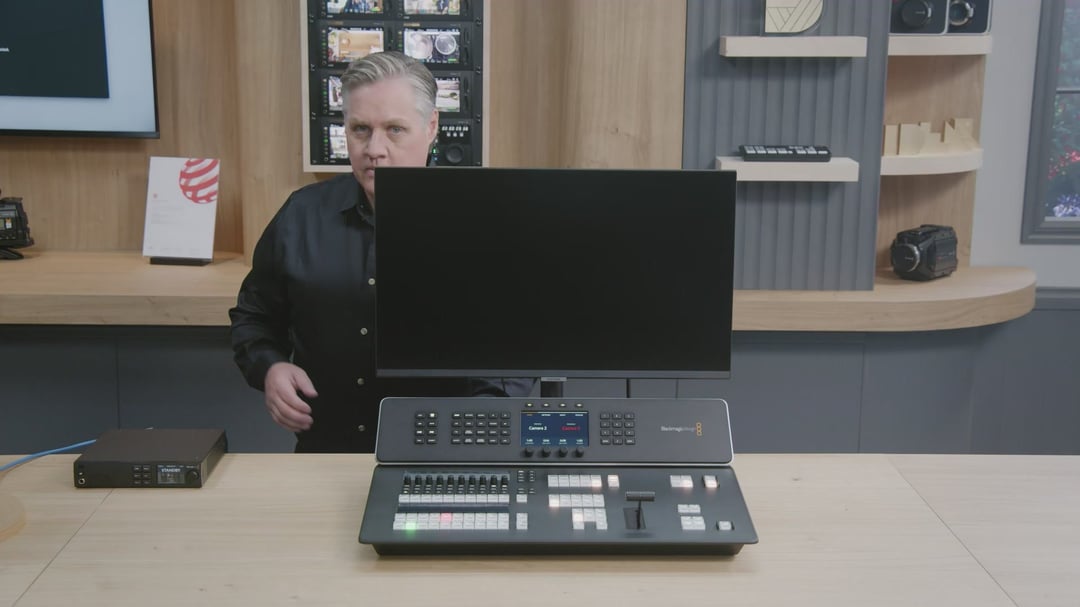
For live switching, the chain gets longer: cameras with clean SDI out, cable runs or a wireless transmitter like a Teradek, a switcher such as the Blackmagic ATEM switcher line, a program monitor, and a recorder capturing the output. Every one of those is a failure point someone has to manage. None of it is glamorous, and none of it shows up in the highlight reel. This is why event videographers who do live work quote higher than someone who films a single locked camera and calls it coverage. You are paying for redundancy, and for a person watching the whole system so nothing drops during the one moment that cannot be repeated.
When one camera is honestly enough
More cameras are not automatically better, and a good videographer will tell you when you are about to overspend. Plenty of projects are cleaner, faster, and cheaper on a single body, and the result looks just as professional. Most buyers overspend right here without realizing it.
A scripted brand story with a controlled set often works beautifully single-camera, because you can reset and shoot each line from a fresh angle. A talking-head testimonial, where the subject can repeat themselves, needs one camera and maybe a locked second for a cutaway. Three is overkill. A short social clip destined for a vertical feed rarely justifies a multi-camera budget at all.
The test is repeatability. If the moment can be redone, one camera and a few takes give you every angle you need, without the extra labor and edit time. If the moment happens exactly once, a ceremony, a keynote, a live award, a founder announcing news to a room, that is when a second and third angle earn their cost. There is no take two.
When you are unsure, describe the event honestly to your videographer and let them push back. A good one will talk you out of a camera you do not need. That is also a decent way to judge who you are hiring. The person optimizing for your outcome instead of their invoice is the one worth booking. If you are still mapping out how booking and scoping works, the how it works overview walks through what to send a videographer up front.
Questions to ask before you pay for a second or third camera
Before you approve a multi-camera video production cost, get five things in writing. These separate a real quote from a guess.
- Is post-production for every camera included, or billed separately? This is where hidden costs live.
- Live-switched or recorded-and-synced? Confirm which you are buying and why it fits your deadline.
- Who operates the extra cameras: dedicated people, or one operator running locked bodies? It changes the coverage you get.
- Is audio captured on an independent recorder with backup? A single point of audio failure can ruin a multi-camera shoot.
- What is the deliverable and turnaround? A same-day switch and a two-week edit are different products at different prices.
One more thing worth checking is the insurance and backup-media policy, especially for once-only events. A crew that shoots to dual card slots and backs up on site is protecting your footage. That diligence is part of what the higher number buys.
The honest summary: a second camera is a modest add, a third is a real commitment, and a live switch is a different category of production entirely. Decide whether your moment can be repeated. If it can, one camera and patience usually win. If it cannot, price the extra angles as insurance. Book the crew that treats your multi-camera video production cost as a coverage decision, not an upsell.