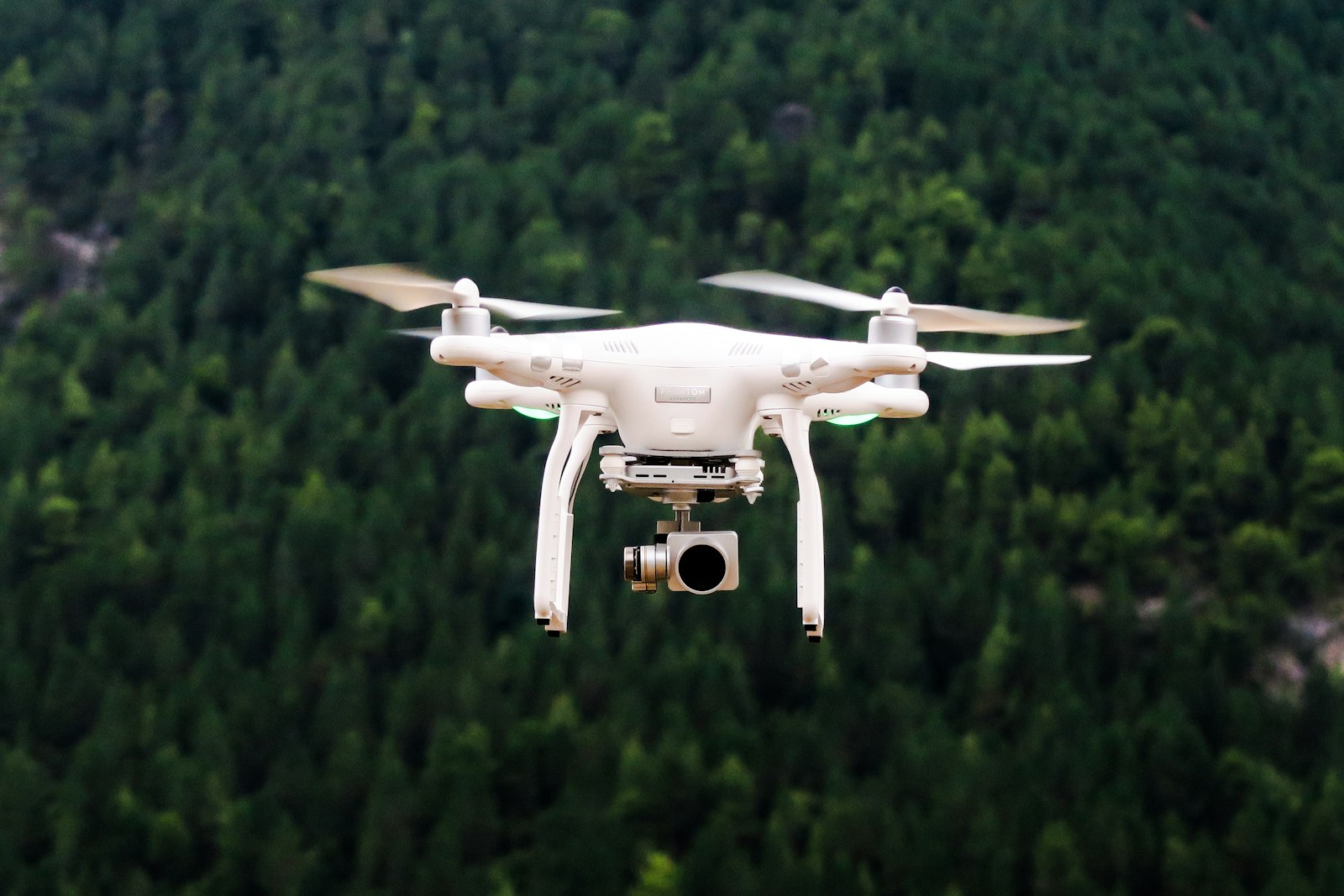
Drone law is one of the most confusing parts of being a working videographer. Rules change, exceptions multiply, and what is legal in one country can get you fined in the next. This is the practical, working-videographer version of what you need to know in the US, UK and EU as of 2026.
Disclaimer up front: this is a working summary, not legal advice. The actual regulations are dense and they change. Before any commercial flight, check the official regulator directly. We are giving you the working version that most professional drone operators use as their day-to-day rulebook.
United States: Part 107
The FAA’s Part 107 certification is the entry-level licence for commercial drone work in the United States. Any flight that involves money changing hands, including video for a client, requires the pilot to hold a current Part 107 certificate.
Getting certified involves passing a written knowledge test at an FAA-approved testing centre. The test covers airspace classifications, weather, drone aerodynamics, regulations, and emergency procedures. Most pilots study for two to four weeks before passing. The certificate is good for two years and is renewed by a free online recurrent test.
Practical limits under Part 107 without a waiver:
- Maximum altitude: 400 feet above ground level
- Daylight operations only, plus 30 minutes before sunrise and after sunset with anti-collision lighting
- Visual line of sight at all times
- Maximum speed: 100 mph
- No flight over people not directly participating in the operation, unless the drone meets specific category requirements
- No flight from a moving vehicle in populated areas
- Controlled airspace requires LAANC authorization or ATC approval
Night operations, flight over people, flight beyond visual line of sight, and operations in restricted airspace all require either an aircraft category certification (drones built and certified to specific safety standards) or a waiver from the FAA. Waivers can take 30 to 90 days to process.
United Kingdom: CAA categories
The UK uses a category-based system from the Civil Aviation Authority. For most commercial videography work, you will operate in the Open category with an A2 Certificate of Competency, or in the Specific category with an Operational Authorization.
Open category, A1 subcategory: Drones under 250 grams. Flight over uninvolved people is permitted but not over crowds. Most consumer drones over the lightest models do not fit this category.
Open category, A2 subcategory: Drones up to 2 kg with the A2 CofC. Minimum horizontal distance of 30 metres from uninvolved people, or 5 metres in low-speed mode for compatible drones. This is where most professional 4K and 6K drones operate.
Specific category: Anything beyond Open category limits. Requires a documented risk assessment and an Operational Authorization from the CAA. Most operators working in commercial real estate, wedding, and event videography apply for Specific category authorization to cover the cases where they need to fly closer to people or in built-up areas.
All commercial drone operators in the UK need to register as an Operator (regardless of category) and the remote pilot needs to be registered with a Flyer ID. Registration is annual and currently costs around 11 GBP. Insurance is mandatory for commercial operations and most providers require evidence of Operator ID and Flyer ID at policy issue.
European Union: EASA framework
The EU rules are roughly aligned with the UK rules, both following the EASA framework. The three categories (Open, Specific, Certified) are the same. The class identification system (C0, C1, C2, C3, C4) determines which subcategory of Open a given drone is allowed to operate in.
The practical difference is that EU member states have national-level implementations on top of the EASA baseline. Germany, France, Spain, Italy and the Netherlands all have additional national rules around no-fly zones, geofencing, and specific permits. Operators flying commercially across multiple EU countries usually carry national registrations in each country they fly in.
The European Aviation Safety Agency maintains a single registration system for the EU. A commercial operator registered in one EU country can usually fly in another, but they must comply with the host country’s local rules.
Insurance, in practice
Public liability insurance is mandatory for commercial drone operations in the UK and EU, and effectively mandatory in the US (clients and venues require it even where the FAA does not). Minimum cover is usually 1 to 5 million USD or the equivalent in local currency. Annual cover for a working operator runs roughly 600 to 1,500 USD depending on flight hours and country.
Operators who work for wedding venues, large corporate events, or film sets often need to add the venue or client as an additional insured for the project. This is a standard request and most insurers add it within a couple of business days.
No-fly zones to remember
The big ones are airports (5 km buffer in most jurisdictions), military zones, prisons, presidential or royal residences, national parks (rules vary by park), and crowds. Beyond those, every country has dynamic restrictions for events, weather, and short-term security needs. The major drone manufacturers update geofencing in their apps in near-real-time, but always cross-check before a shoot.
Useful tools to bookmark:
- US: FAA B4UFLY app, LAANC for controlled airspace authorization, AirMap.
- UK: Drone Assist app from NATS, AirMap UK, Altitude Angel.
- EU: Each member state has a national airspace app. SkyDemon and Airmap have multi-country coverage.
Hiring a drone videographer
When you are hiring a drone operator for a project, ask three things up front. Their certification (Part 107 in the US, A2 CofC or Operational Authorization in the UK, equivalent in the EU). Their insurance limits and whether they can add you as an additional insured. Their experience flying in your specific shoot environment (urban, coastal, mountain, low-light).
A working drone operator with two to four years of commercial experience will answer all of these immediately. They will also volunteer information about the local airspace and any required authorizations before you have to ask.
Most weddings, real estate films, and brand videos that need drone work are best handled by a single videographer who covers both ground and aerial. The teams in our drone videographer directory are all working commercial operators with valid certifications. Many of them also list as wedding, real estate, or brand specialists in our wider directory.