Last spring, a regional HVAC company in Ohio asked for quotes on a 30-second spot. One local shooter came back at $4,800. An agency came back at $41,000. Both numbers were honest. The gap between them is what this guide covers: what a TV commercial cost actually pays for in 2026, line by line. By the end you should be able to tell which quote matches the ad you need.
TV Commercial Cost in 2026: Three Real Tiers
Most TV commercial cost quotes land in one of three price bands. Camera choice has little to do with which band you end up in. What decides it is how many people are on set and how long, and where, the ad will run.
Local and small-business spots: $2,500 to $10,000. You get one to three crew members, a single shoot day or less, and one or two locations. The owner or staff appear on camera, the music comes from a licensed stock library, and the graphics are simple lower thirds and an end card. The camera is usually a Sony FX6 or FX3, a Canon C70, or a Blackmagic Pyxis, lit with a pair of Aputure 600-series fixtures and some LED panels. These spots run on local cable, regional streaming, and the late news break on a mid-market affiliate. They work when the message is simple: who you are, what you do, how to reach you.
Regional and mid-tier: $10,000 to $60,000. Now the director is a separate person from the camera operator. You add a gaffer and grip team, a dedicated sound mixer, hair and makeup, cast actors, possibly a location permit, a professional colorist, and a sound designer. Shoots run one to two days. The camera often moves up to a rented ARRI Alexa Mini LF or RED V-Raptor. Car dealer groups, hospital systems, credit unions, and regional restaurant chains usually buy in this range.
National: $150,000 and up. This tier brings production companies, agency creative fees, union talent with network usage, multiple shoot days, VFX, and original music. Trade surveys from the 4A’s have for years put the average national 30-second spot in the low to mid six figures. If you are reading a blog post to budget one of these, you are probably not buying in this tier, and that’s fine. The rest of this guide focuses on the first two. That is where most businesses get their TV commercial cost wrong, in one direction or the other.
Where the Money Goes: A $25,000 Spot, Line by Line
Clients tend to focus on the shoot day. It is usually only about 40 percent of the total TV commercial cost. Below is a realistic breakdown for a 30-second regional spot with one shoot day, two locations, two cast actors, and a 15-second cutdown.
| Line item | Cost |
|---|---|
| Pre-production: script, storyboard, casting, scout | $2,200 |
| Director (prep day plus shoot day) | $3,500 |
| DP with camera package (Alexa Mini LF, lens kit) | $2,500 |
| Gaffer, key grip, grip and electric truck | $3,200 |
| Sound mixer with kit | $900 |
| Talent (two non-union actors, one-year buyout) | $2,500 |
| Location fees | $1,500 |
| Hair and makeup | $700 |
| PAs, catering, production insurance | $1,800 |
| Editing (two days plus two revision rounds) | $2,500 |
| Color grade | $1,200 |
| Sound design and broadcast mix | $1,000 |
| Music license (broadcast use) | $800 |
| Graphics and end card | $700 |
| Total | $25,000 |
A few lines stand out. Lighting and grip ($3,200) cost more than the camera ($2,500). That’s normal on a commercial set, and it surprises almost everyone. Camera bodies are cheap to rent now. Experienced crew are not. Post-production comes to $6,200, a quarter of the budget, and that assumes nobody asks for a third round of changes.
Say a $6,000 quote and this $25,000 quote both promise “a 30-second commercial.” The difference is in this table. The cheaper shop is probably folding director, DP, and editor into one person. It is likely shooting with available light plus a few panels, using your staff instead of actors, and pulling music from a subscription library like Musicbed or Artlist. None of that is wrong. It produces a different ad, and for plenty of local businesses it’s the right one.
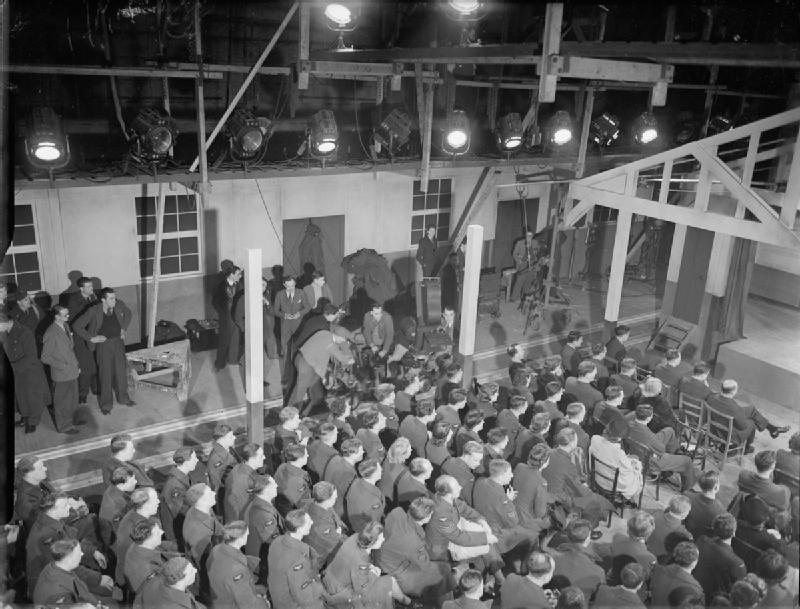
Talent Fees and Usage: The Line That Surprises People
Talent usage is the part of TV commercial cost that first-time advertisers miss more than any other. Paying an actor for the day is only part of what you owe. You also pay for how long their face runs and where.
Non-union local talent usually costs $300 to $1,200 for a shoot day, with usage written into the release, for example one year of regional broadcast and online. If you want to run the spot for three years, expect a renewal fee, often 50 to 100 percent of the original rate for each extra year. The other option is a perpetual buyout negotiated up front, which commonly runs two to three times the day rate.
Union talent and residuals
Union talent under the SAG-AFTRA Commercials Contract is priced differently. You pay a session fee for the shoot day, which under the current contract is in the high hundreds of dollars for an on-camera principal. On top of that come use fees, which are tied to 13-week cycles and to the type of airing: wild spot, local cable, network, or streaming. Two principals on a regional spot that runs for a year can add several thousand dollars in residuals. Those never show up on the production quote because the production company doesn’t pay them. You do, through a payroll company like Cast & Crew or Entertainment Partners. Rates change with each contract cycle, so get the current rate sheet before you budget.
The cheapest route, and often the most convincing one, is to put your own people on camera. A plumber who really owns the company reads as more trustworthy than a hired actor in a branded polo. Just get a signed talent release that stays valid after the person leaves the company. More than one business has had to pull a spot because the featured employee quit and asked to be removed.
TV-Ready Delivery: Specs, Loudness, and Clearance
“Broadcast quality” used to describe a camera. In 2026 it describes a file that passes a station’s technical QC on the first try, and plenty of freelance edits don’t.
Most stations and distribution platforms ask for these:
- Exact duration: a :30 runs 30 seconds, not 30 seconds and 12 frames. Many stations want the audio to end a few frames early so nothing gets clipped at the cut.
- Loudness: -24 LKFS integrated, plus or minus 2 dB, per the FCC’s CALM Act rules and the ATSC A/85 standard. A spot that’s too loud gets rejected or turned down automatically.
- File format: usually ProRes 422 HQ or high-bitrate MXF at 1920×1080, 29.97 fps, with slate and 2-pop if the station asks for them. Hulu, YouTube, and other CTV platforms publish their own spec sheets.
- Ad-ID code: a unique identifier for each version that most US broadcasters and buyers use to track spots. Every cutdown needs its own.
- Captions: more and more streaming platforms require them, and they’re a good idea everywhere.
Stations usually receive spots through a distribution service such as Extreme Reach or a regional dub house rather than by email. Fees run roughly $25 to $100 per destination per version. So ten stations and two versions comes to $500 to $2,000 in delivery alone, and it rarely appears in a production quote unless you ask for it. This is one of the places a low TV commercial cost hides expensive surprises.
Clearance takes time too. Stations and networks review the claims in your spot. “Best pizza in Denver” needs proof or a softer rewrite. Music also has to be licensed for broadcast, not just online. Some subscription libraries cover only web use at their base tier, so confirm that your editor’s plan includes broadcast before you’re three days from air.
How to Cut Costs Without Looking Cheap
Viewers forgive a simple ad. They don’t forgive bad audio, muddy lighting, or a script that tries to say six things in 30 seconds. Spend on what viewers notice and save on what they don’t. Here is where I would trim a TV commercial cost first, in order.
Shoot every version on the same day. If you’ll need a :30, a :15, and a 6-second bumper for YouTube, write all three before the shoot. Cutting extra versions from existing footage adds $800 to $2,500 in post. Going back for a second shoot day to capture them means paying the full day rate again.
Location count is the next lever. On a small set, every company move costs about 90 minutes of crew time, and more on a bigger one. Two rooms in the same building cost you nothing extra. Two locations across town cost you most of an afternoon.
Stock footage covers the shots you can’t afford to stage. An establishing aerial of your city from Artgrid or Getty costs $100 to $500. A custom drone shot of your building runs $500 to $1,500 as an add-on, which only makes sense if the building is the point of the ad. If it is, book a pilot who holds an FAA Part 107 certificate through our aerial drone videographer directory.
Stick to one message. A 30-second spot holds about 65 to 75 spoken words. If you write 110, the editor will cut your best line or the voiceover will sound like a pharmaceutical disclaimer.
The one line you should never cut
Don’t cut the sound mixer. That $900 line protects the whole shoot. A mixer running a Sound Devices MixPre with a boom and two Sennheiser lavs will hear the HVAC kick on in the middle of your best take. They will stop the shot. Without one, you find out in the edit, and re-recording the owner’s lines in a booth costs another $400 to $600 and never matches the room.
Production Cost vs Media Buy: Budget Both Together
A beautiful $40,000 spot that airs eight times is money wasted. The most common budgeting mistake in small-market advertising is to spend most of the money making the ad and very little showing it.
A useful rule: production should be roughly 10 to 20 percent of a year’s total campaign spend. If you plan to put $60,000 into airtime, a TV commercial cost of $6,000 to $12,000 is about right. With a $10,000 media budget, a $2,500 to $5,000 spot fits.
Media prices vary a lot by market and time slot. In a small market, local cable spots can cost $10 to $100 per airing. A 30-second slot during the evening news in a top-25 market can cost several thousand. Connected TV ads, targeted by zip code, typically run around $25 to $50 per thousand impressions. That has made TV affordable for businesses that never considered it before, like a two-location dental practice or a single-county roofing company.
How often the spot airs matters more than how polished it is. Media buyers generally want a viewer to see an ad several times before it sticks. A simple, clear spot you can afford to air 400 times usually beats a gorgeous one you can afford to air 40 times. Talk to your station rep or media buyer before you set the production budget, not after it’s spent.
How to Compare Quotes from Commercial Videographers
Two TV commercial cost quotes that sit $15,000 apart are often closer than they look once you compare them line by line. Send every bidder the same questions, in writing, and compare the answers side by side.
Who writes the script, and is concept development included? Some shops quote production only and expect you to arrive with a finished script. Others build in a creative day.
Which usage and talent fees are included, and for how long? A quote that lists “talent” with a six-month web buyout is not the same as one with a one-year broadcast buyout.
How many versions are delivered? A :30, a :15, a 6-second bumper, and a vertical cut for social should each be listed separately.
How many revision rounds? Two is standard. After that, expect editing to be billed hourly at $75 to $150.
Are broadcast QC, loudness compliance, and station delivery included? If not, add the delivery fees from the section above to the quoted TV commercial cost.
Then ask to see spots they have actually put on air, not just their brand films. Commercial work has its own rhythm: a hook in the first two seconds and an end card that’s easy to read. The call to action has to stay on screen long enough to register. A shooter who makes excellent brand films may still need a sharp editor to get that work down to 30 seconds. You can browse commercial videographers on BookVideographer by city, watch their aired work, and send the same brief to three of them. Our how it works page walks through the request process.
Before you ask for a single quote, settle three things: where the spot will air, how long it will run, and the one action you want viewers to take. Those answers shape your TV commercial cost more than any camera on a spec sheet. Any producer worth hiring will ask about them in the first phone call.