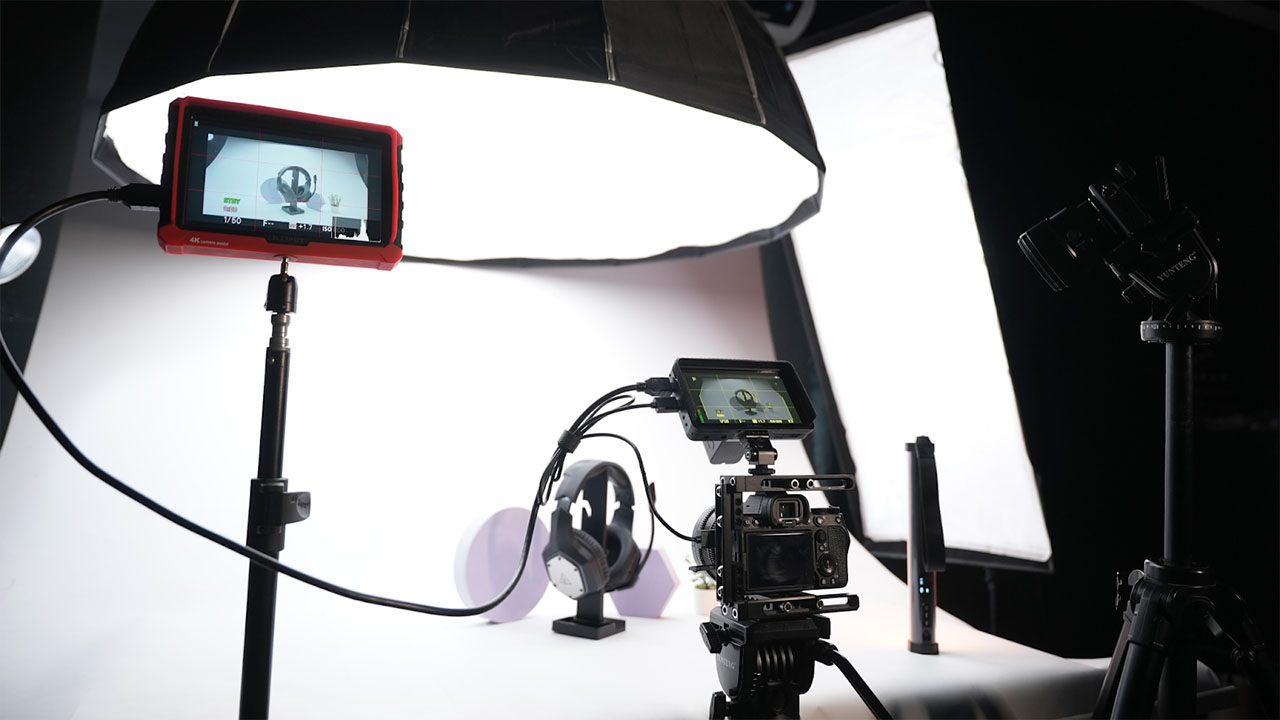
You have a product ready for Kickstarter, a launch date circled on the calendar, and one nagging line in your budget spreadsheet: the pitch video. How much should it eat? Campaigns that reach their goal usually spend between $2,000 and $12,000 on that video, and the ones that skip it entirely tend to stall out well short of funded. Kickstarter’s own creator handbook reports that projects with a video succeed at a far higher rate than those without. So the real question is not whether to make one. It is how much crowdfunding video cost you can justify at your funding target, and where that money actually goes.
This guide breaks down 2026 crowdfunding video cost by production tier, explains why two quotes for the same video can be $3,000 apart, and shows you how to brief a videographer so you are not paying for footage you never use.
What a crowdfunding video costs in 2026
Prices split into four rough tiers, and knowing which one you are shopping in saves a lot of wasted calls.
- DIY on your own phone or a borrowed Sony a6700, with a friend running audio: $0 to $500 once you add a lav mic and a soft light.
- Solo freelance videographer who handles filming, interviews, and the edit: $1,500 to $4,000 for a one-day shoot and a two-to-three minute cut.
- Small production house with a two-person crew, a proper camera package, and motion graphics: $5,000 to $15,000.
- Full agency that scripts, casts actors, builds sets, and produces broadcast-grade animation: $20,000 and up, climbing past $50,000 for hardware campaigns with complex demos.
Most successful campaigns in the $30,000 to $200,000 funding range land in that middle band, roughly $4,000 to $10,000. At $6,000 you can usually get a scripted founder segment, a dedicated demo setup, and a handful of motion-graphic callouts for specs. That number buys trust without swallowing the margin you need for fulfillment.
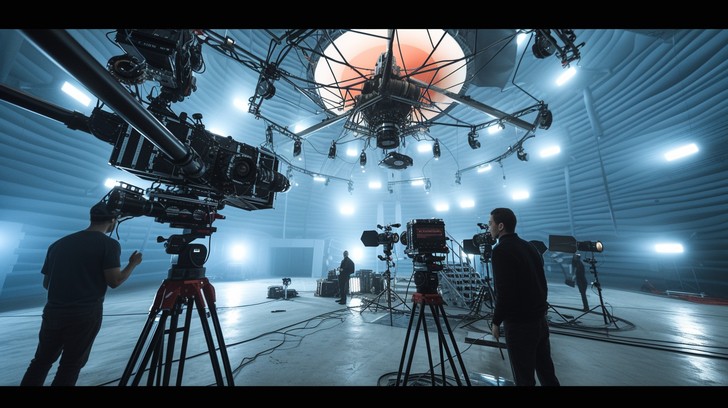
The gap between a $2,000 video and a $10,000 video is rarely image quality. Modern cameras make almost anything look clean. The real gap sits in scripting, direction, a second camera angle, product close-ups that sell the mechanism, and an editor who understands pacing for a page where viewers bail after 30 seconds.
Why two quotes can be thousands of dollars apart
Send the same brief to three videographers and the crowdfunding video cost can come back as $2,800, $6,500, and $14,000. Nobody is lying to you. They are pricing different amounts of labor.
Shoot days drive the biggest swings. A single day covers a founder interview and basic product footage. Two days let a crew grab a location scene, a demo sequence, and lifestyle B-roll of the product in real use. Each extra day adds crew pay, gear rental, and often a location fee, so $1,800 to $3,500 per day is normal for a small professional team. For gear alone, a rental marketplace like ShareGrid runs $75 to $150 a day for a camera body, and a two-camera package with lights can hit $400 to $600 before anyone on the crew is paid.
Animation is the other line item that quietly doubles budgets. A few animated captions and a logo sting cost a couple hundred dollars. A 40-second sequence that explains how your water filter works, built from scratch, runs $2,000 to $6,000 on its own. Custom motion graphics get billed by the second of finished screen time, often $150 to $250 a second, and it shows on the invoice.
The smaller extras add up fast: professional voiceover talent ($200 to $600), licensed music ($50 to $500 depending on the track), a hired actor or two ($300 to $800 each per day), and revision rounds. Get the music license in writing. A track from a library like Artlist or Musicbed is cleared for commercial use; a song ripped off YouTube is a takedown waiting to happen the day your campaign goes viral.
If you want a video that leans on polished visuals, look at how brand film production gets priced, because a strong crowdfunding video is really a short brand film with a call to action bolted on the end.
The anatomy of a video that actually converts
A crowdfunding video is not a commercial. It has one job: get a stranger to trust you enough to pre-pay for something that does not exist yet. The structure that pulls that off is fairly consistent, and it should run 90 seconds to three minutes. Go past three and completion rates fall off a cliff.
The opening 10 seconds have to show the product doing the thing people want it to do. Skip the slow logo intro. Watch a strong hardware pitch like a Peak Design campaign and the first frame is already the product in a hand, doing its job. Then comes the problem you solve, stated plainly, ideally by the founder on camera so a real human face is attached to the promise. From there the video moves into the product itself: how it works, why it is different, and a demo close enough that viewers can judge the build quality. A short founder-to-camera moment about why you built it earns credibility no stock footage can fake. Finally comes the ask, spoken out loud, telling people exactly what backing the campaign gets them.
A good videographer will push back on your instinct to cram in every feature. Restraint is the skill you are paying for. Five features shown clearly beat fifteen shown in a blur, every time.
Freelancer or production company: which fits your campaign
For most first-time creators raising under $50,000, a solo freelancer or a two-person crew is the right call. You get a lower rate, a direct line to the person doing the work, and enough production value to look legitimate. The tradeoff is bandwidth. One person cannot light a scene, run a second camera, and record clean audio at the same time, so complex shoots take longer or lose a little polish.
A production company earns its higher fee when your video needs several locations, actors, a scripted narrative, or product animation that has to be exact. You also buy redundancy. If a camera dies, there is a backup on set instead of a reshoot next week. The cost of that reliability is distance: you often work through a producer instead of talking to the editor directly, and small changes route through email chains. A freelancer might invoice $3,200 for a full day plus the edit, while a production company quoting the same deliverable often lands near $7,500 once you add a producer, a gaffer, and a second shooter to the call sheet.
The honest middle path many creators miss is hiring a strong freelancer for the shoot and a separate specialist for the animation. You keep the personal working relationship and only pay agency rates for the one piece that genuinely needs it. If you want to weigh the two models against real numbers, you can compare available crews and rates on the pricing page before you commit to either.
What to budget at each funding target
Match the crowdfunding video cost to what you are actually trying to raise, not to what looks impressive on a moodboard.
If your goal is under $15,000, keep the video at $500 to $2,500. A clean founder interview with sharp product footage is plenty, and spending more risks putting the video underwater against your own target. A $15,000 to $50,000 goal supports $2,500 to $6,000, which covers a real shoot day, a second angle, and light motion graphics. Campaigns aiming for $50,000 to $150,000 can justify $6,000 to $15,000, because at that scale a more convincing demo directly moves the conversion rate that decides whether you fund.
Say you are raising $40,000 for a stainless travel mug. A $4,000 video with one shoot day, a founder interview, and a clean pour-and-seal demo sits right in the sweet spot. A $12,000 animated production would be money you then have to claw back out of fulfillment.
Above $150,000, especially for hardware, $15,000 and up is defensible, but only if the product genuinely needs animation or staged demonstration to be understood. A rough rule that holds up in practice: the video should cost 5 to 15 percent of your funding goal, weighted higher when the product is hard to explain in words. A software tool needs less. A folding electric bike needs more.
Do not forget the two costs that hide outside the video invoice: photography for your campaign page and any product prototypes you need on set. Many creators bundle stills into the same shoot, which beats booking a separate product video session a month later.
Animation, demos, and the line items people forget
The biggest surprise in a crowdfunding video cost is almost always product demonstration. If your product has moving parts, a hidden mechanism, or a before-and-after result, showing it clearly can require a rig, a macro lens, controlled lighting, and sometimes a cutaway model. Plan on a macro lens such as a 100mm f/2.8, an Aputure LED panel or two for even light, and often a motorized turntable so the product rotates on a clean loop. Rent that package for a day and you have added $250 to $500 before the operator’s time.
Animation gets priced by finished seconds, so a 30-second explainer is not half the cost of a 60-second one when the setup work is fixed. Ask any studio to quote animation separately from live action so you can see the split and cut it if the budget tightens. Voiceover, licensed music, and captions each land in the low hundreds. Captions matter more than creators expect, because most Kickstarter and Indiegogo traffic watches on mute in a feed first.

Build revisions into the contract from the start. Two rounds of changes is standard. A videographer who offers unlimited revisions is either padding the base price or setting up a fight later, so pin down the number and spell out what counts as a revision versus a brand new edit. That one clause prevents most of the disputes that sour these projects.
Timeline and how to brief your videographer
Start looking for your videographer six to eight weeks before your launch date. Editing alone takes one to three weeks depending on animation, and you want the finished video ready before you build the campaign page around it, not scrambling the night before. If you are launching in mid-March, that means locking your videographer by late January and shooting in February, with a clear two-week edit buffer. Rushed crowdfunding videos look rushed, and backers can tell.
A tight brief saves you money because it cuts wasted shoot time. Before the first call, write down three things: the single most important thing your product does, the three features you must show, and two or three campaign videos you admire with a note on why. Bring your prototype, even a rough one, because the videographer needs to plan how to film it. Agree on deliverables in writing: the main cut, a 30-second social teaser for ads, vertical versions for Reels and TikTok, and the raw or graded files if you want them. The how it works page walks through how projects get scoped from that first brief to final delivery.
One last piece of leverage. Book the shoot for a window when you can be fully present and rested, because your on-camera energy is the cheapest upgrade available. No amount of color grading fixes a founder who looks like they would rather be anywhere else.
Before you sign anything, get the full crowdfunding video cost in writing, with shoot days, revision rounds, and deliverables itemized, then hold that number against 5 to 15 percent of your goal. If it fits, book it. If it does not, cut the animation before you cut the founder interview, because trust funds campaigns and polish only decorates them.