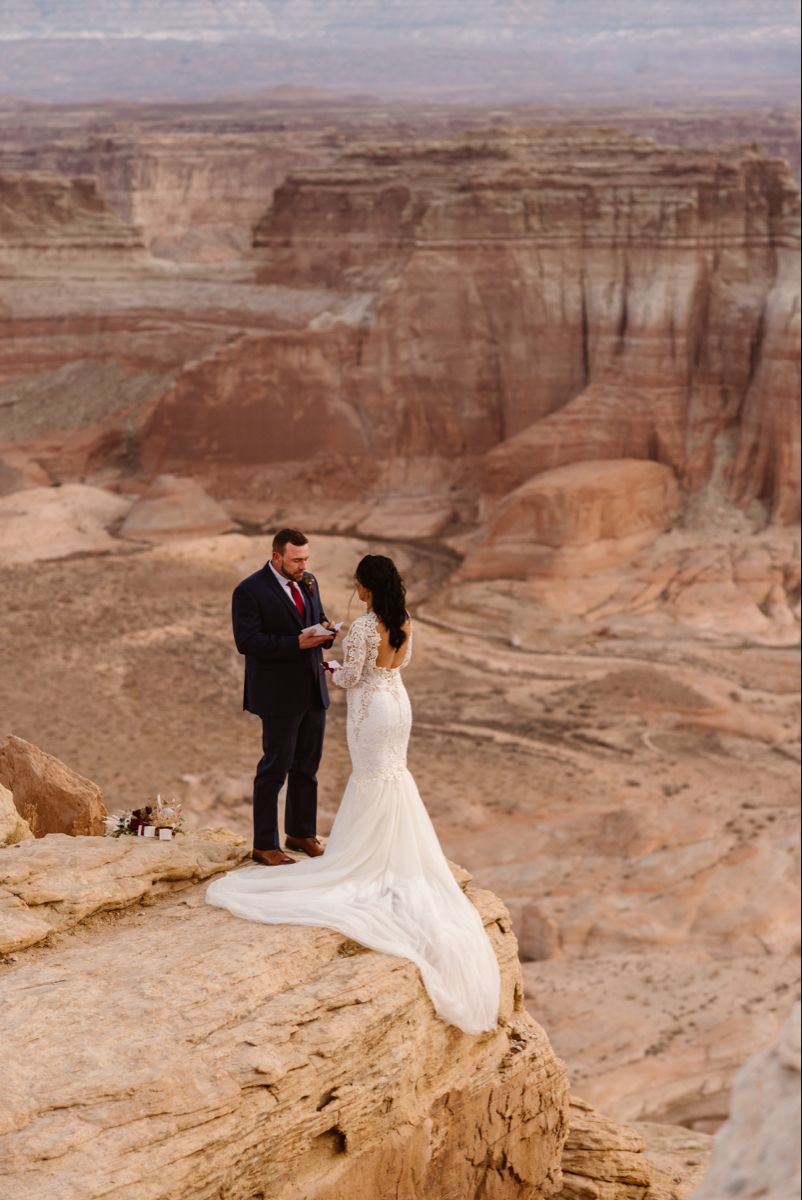
Your permit slot at Delicate Arch is 6 a.m. Eight people are coming. The last vendor left to hire is someone to film it. The first quote lands at $3,200, and you start doing math against your friend’s 150 guest Saturday. Hers ran $3,800 for eight hours of coverage. Elopement videographer cost tracks travel, edit hours, and the risk of a morning nobody can reshoot. Guest count barely moves it. The number stops feeling strange once you see where the hours actually go.
What an elopement videographer cost looks like in 2026
Pricing two people on a cliff is more standardized than pricing a 200 guest reception, because the product barely varies. One shooter. A short film. A clean recording of the vows. What moves the number is how far that shooter travels, how long the day runs, and how hard the location is to reach.
Here is where quotes tend to land for 2026 dates in the US:
- Local, two to three hours of coverage, one shooter, one 3 to 4 minute film: $1,200 to $2,200
- Half day, roughly four to six hours from getting ready through a dinner toast: $2,200 to $3,800
- Full adventure day with a hike, sunrise ceremony, and sunset portraits: $3,500 to $6,000
- International destination, two or three days on the ground, travel included: $6,500 to $12,000
Geography moves those bands more than anything else. A Denver, Moab, Sedona, or Asheville shooter who films 25 elopements a year has a waiting list and prices accordingly. Expect 20 to 35 percent above someone in Iowa or east Texas doing identical work. Peak October weekends get quoted at the top of the range, or not at all. Same for any date within a week of a full moon in the desert.
One thing to check before you compare two numbers: what counts as “coverage.” Some shooters start the clock when they arrive at your hotel room. Others start it when the ceremony begins, and a 90 minute drive between the two is either billed or included. Get the start and stop time in the contract, not in the email thread. Most couples overspend by an hour right here, for no reason other than a vague sentence. If you are still shortlisting, the wedding videographer directory is a reasonable place to compare a dozen reels before you request quotes from three.

Why two hours of coverage isn’t priced like two hours
The shoot is the short part. Most of an elopement videographer cost is spent before and after the ceremony, not during it. A three minute film cut from two hours of footage still runs 12 to 20 hours in the timeline:
- Ingest, then a second backup copy on a separate drive
- Syncing a DJI Mic 2 lav and a Tascam DR-10L on the officiant against camera audio
- A rough assembly, then a music search that eats an hour by itself
- Color, then two rounds of small fixes after you watch the first cut
Price that labor at $125 to $150 an hour. The edit alone lands at $1,500 to $3,000 before anyone gets in a car.
Then there is the date itself. Someone who blocks Saturday, September 12 for your 7 a.m. ceremony is not also taking a $4,000 full wedding that day. They will be driving home at noon on three hours of sleep. Half day pricing that ignores that reality usually comes from shooters in their first two seasons. It usually disappears from their pricing page by year three.
Gear carries real cost too. A Sony FX3 body runs about $3,900. A backup body adds $2,500 to $4,000, and a 24-70 GM II another $2,300 or so. That is before a gimbal, batteries, CFexpress cards, and a laptop that can handle 4K 10-bit footage without stuttering. General liability at $2 million, plus an inland marine rider on the gear, costs $700 to $1,400 a year. Spread across 20 to 30 jobs, equipment and insurance add $200 to $400 per shoot before profit.
My honest read: a $900 quote is not a bargain version of a $2,400 quote. It is fewer edit hours, a shorter film, or someone who has not yet priced in the second body sitting unused in the bag. You are paying for that unused body. Being unused is the entire point of it.
Travel, permits, and terrain: the fees nobody quotes upfront
Travel is the biggest single swing in elopement videographer cost. It is where two quotes that looked $400 apart end up $1,500 apart. Most shooters include a radius, commonly 30 to 60 miles from home base. Past that, they bill mileage near the IRS standard mileage rate, roughly $0.70 a mile. Drive time over about two hours often converts to a half day rate, or a flat travel day of $300 to $500. A 5:30 a.m. trailhead call also means a hotel the night before. In Moab or Jackson during season, that is $150 to $300, and it is your line item, not theirs.
Flights change the shape of the whole quote. Plan on covering three things on a fly-to elopement:
- Airfare, plus one or two checked bags at $40 to $100 each
- A rental car, because trailheads are not on a shuttle line
- Lodging for the night before a sunrise ceremony
Camera gear stops fitting in a carry-on once a backup body comes along. Some shooters bill actual receipts with copies attached. Others quote a flat domestic travel fee of $1,200 to $2,500 and eat the variance. The flat fee is usually the better deal for you if the shooter travels often. They know what a week in Iceland actually costs. Videographers who specialize in travel and destination work tend to have this priced cleanly rather than guessed at.
Permits are their own category. Ceremony permits at popular national parks commonly run $100 to $350, and the money is the easy part. Many locations cap group size at 10 to 30 people, restrict specific viewpoints, and release dates up to a year ahead. Rules for commercial filming shifted after 2021 litigation over the old permit scheme. Small crews with handheld gear get handled differently than a full production. Confirm the current requirement with the specific park, not with a blog post from 2022. State parks, county beaches, and private ranches each run their own forms and fees.
Terrain quietly changes the kit. A four mile approach with 1,800 feet of gain means the gimbal stays in the car. Your shooter carries one body, a 24-70, and maybe a 70-200. You get more handheld movement in the finished film as a result. That is a fair trade for the view, but know it going in rather than discovering it in week six.
What you actually get back, and when
Get the deliverable list in writing before you compare two prices. “Elopement film” means wildly different things to different shooters. A package in the $2,000 to $3,500 range usually includes:
- A 3 to 5 minute highlight film, cut to licensed music
- A documentary edit of the full ceremony, 8 to 20 minutes
- A clean audio file of the vows, pulled off the lav
- A 60 to 90 second vertical cut, increasingly standard
That vertical cut matters more than couples expect. It is the version friends and family will actually watch, usually on a phone, usually inside the first week.
Turnaround is where expectations break. Four to eight weeks is normal. Book an October date and you sit in the same queue as every fall wedding that shooter filmed, so ten weeks happens. Rush delivery inside two weeks typically costs $300 to $800. A same-week teaser is often $150 to $300 if you ask at booking rather than after the shoot.
Music licensing is real, and it shows up in the price. A single Musicbed or Soundstripe track licensed for a client film runs $60 to $200. An Artlist subscription costs a few hundred a year. Anyone handing you a film cut to the actual Bon Iver recording is exposing your video to a takedown the moment it hits YouTube. Ask which library they license from. A shooter who cannot answer that in one sentence is guessing.
Raw footage is a separate conversation. Two hours of coverage generates 300 to 800 GB. Delivery means a physical drive at $90 to $140 plus shipping. Most shooters charge $200 to $500 on top for handling and organization. Read the retention clause while you are in there. Plenty of contracts keep footage for only 30 to 90 days after final delivery. After that, your only copy is the one you downloaded.

Micro weddings: where elopement pricing stops applying
Somewhere between 15 and 40 guests, the job stops behaving like an elopement. A ceremony for two takes eight minutes and involves two people who need no direction. Add 30 guests, a venue coordinator, a first dance, three toasts, and a cake cutting. Now you have a compressed wedding day that runs six to eight hours. It carries the same audio and timing problems as a full Saturday. Past that line, elopement videographer cost stops being the right benchmark.
Pricing follows. Expect $2,800 to $5,500 for a micro wedding film, close to what a full wedding costs in many markets. The reason is coverage overlap. Toasts need two cameras, because a single locked-off wide makes a four minute speech unwatchable. Reception audio needs a feed from the DJ board or a recorder on the mic stand, plus a backup. A second shooter adds $400 to $800 and earns it once guest count passes about 25.
Timeline creep is the other cost. Elopements finish when the light goes. Micro weddings run long, dinner starts 40 minutes late, and the overtime clause kicks in at $200 to $400 an hour. If your reception has any chance of drifting, book the eight hour package instead of the six. Prepaid hours are almost always cheaper than overtime.
One planning note that saves real money: schedule the ceremony so portraits land in the last 90 minutes of daylight. Good light is free. It does more for the finished film than any add-on you can buy. It costs you one conversation with your planner, not a change order.
Drone shots, second angles, and hybrid photo plus video
Aerial coverage is the most requested add-on and the most frequently impossible one. A drone add-on runs $300 to $600 when the operator is already on site. It costs more if a dedicated pilot drives out for it. That pilot needs an FAA Part 107 certificate to fly for compensation. Ask to see it. A hobbyist flying your paid elopement is operating outside the rules and outside their insurance. Your film is the collateral.
Location kills more drone shots than weather does. Launching, landing, or operating a drone from land inside a US national park is prohibited. Zion, Yosemite, and Rocky Mountain are out, whatever anyone promises you over email. National forest and BLM land is usually fine outside designated wilderness. Coastal parks, state parks, and anything near an airport carry their own rules, and controlled airspace needs a LAANC authorization. That takes about a minute in an app, and it does get denied. Sort the location question before you book if aerials matter to you. Or hire from a pool of licensed drone operators who already know the local airspace.
Hybrid shooters deliver both photo and video for $3,500 to $6,000. That is a genuine option for a two person ceremony and a bad one for anything larger. Nobody can hold a gimbal move and take a still of your face in the same second. Something always gets compromised. With two witnesses and an eight minute ceremony, the compromise is small and the savings are real. At 30 guests, hire two people and stop trying to save $1,200.
Second angles are the quieter upgrade. A locked-off second camera on the vows costs less than a full second shooter, often $200 to $400. It saves the edit on the day a gust of wind ruins the primary take.

Questions to ask and clauses to read before you send a deposit
Most elopement disputes trace back to four lines of a contract nobody read closely. Deposits usually run 30 to 50 percent and non-refundable, which is fair enough. The surrounding terms are what actually protect you. Ask these before you pay:
- What happens if weather closes the pass or the trail on our date, and do we reschedule or refund?
- Is travel billed as actual receipts or a flat fee, and what is the cap?
- Who shoots if you get sick, and is that person named in the contract?
- What is the guaranteed delivery date in writing, not the typical turnaround?
- How long do you keep the raw footage after final delivery?
The weather clause deserves the most attention on an adventure elopement. A good contract separates your cancellation from a genuine access failure, like a road closure or a wildfire evacuation. It should offer a rescheduled date within 12 months, with the deposit applied. Force majeure language that only protects the videographer is a signal to keep looking.
The backup shooter clause matters more when your ceremony sits somewhere nobody can drive to on two hours notice. Someone with a real network of peers in Salt Lake or Bozeman can deliver on that promise. Someone shooting their fourth elopement cannot, and the honest ones say so before you ask.
Pay by credit card or ACH against a real invoice. Keep the thread in email rather than DMs. Get any timeline change confirmed in writing, even a 30 minute shift. The how it works overview covers the standard booking path, from first inquiry through final delivery. The common questions page handles smaller details like travel deposits and delivery formats.
Budget your elopement videographer cost as one line: package, a realistic travel figure, and permits. Get all three on the same page of the contract before you sign. A quote that hides two of those three is not cheaper, just less finished. Then send your shooter the sunrise time and the trailhead name, and let them plan the rest around the light.