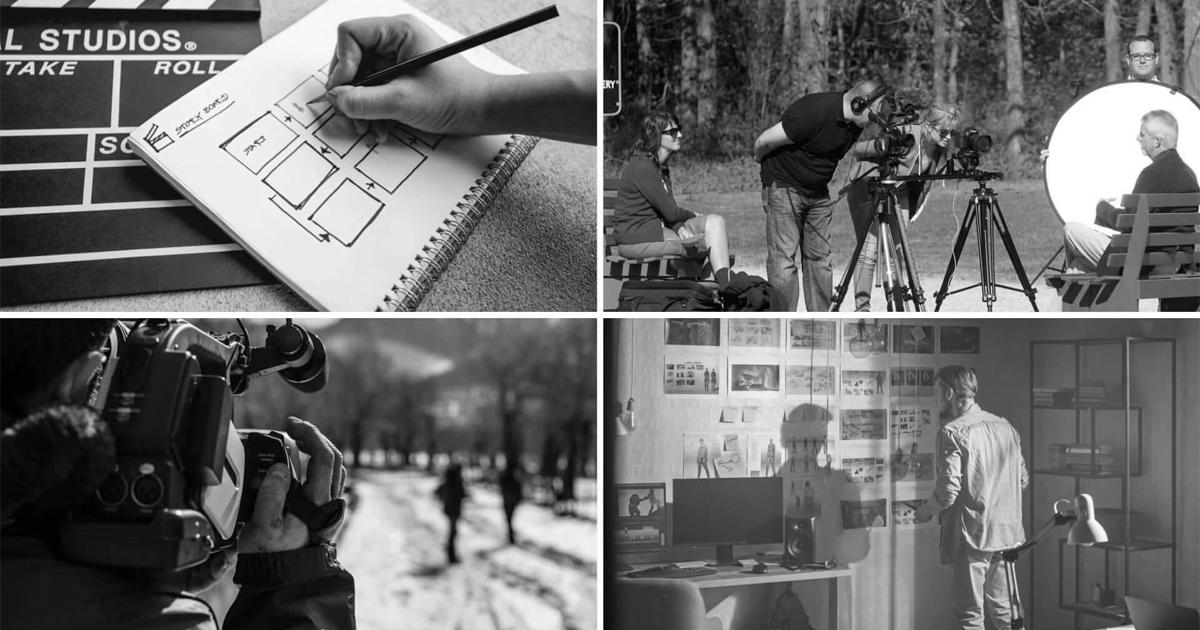
You email three videographers the same line: “We need a video for our website, what do you charge?” One quotes $1,800, one quotes $6,500, and one asks fourteen questions before naming a number. The spread is not because two of them are ripping you off. It is because a one-sentence request forces every videographer to guess at scope, and they each guessed differently.
A video brief is the document that removes the guessing. Get it right and your quotes land within a tight, comparable range. Your shoot day runs on time, and the first edit looks close to what was in your head. Get it wrong, or skip it, and you pay for the gap in revisions and change fees later. This is a walkthrough of what actually goes into a usable video brief. It covers what to leave out, and a template you can copy today.
What a video brief actually is
A brief is not a script and it is not a shot list. Those come later, and often the videographer writes them. A brief is a short document, usually one to two pages. It answers a simple question: what are we making, for whom, and why. It sits above the creative decisions and defines the box those decisions live in.
Think of it as the difference between telling a builder “I want a house” and handing them a real plan. That plan says three bedrooms, two baths, single story, this lot, this budget, move in by September. The builder still designs the house. But now every builder you ask is pricing the same house, and you can actually compare their numbers.
The brief protects you more than it protects the videographer. When a dispute happens six weeks in, the argument is almost always about something that was never written down. “I assumed the drone footage was included.” “I thought we agreed on two rounds of edits.” A brief that names the deliverables in plain language ends most of those fights before they start. If you want to see how professionals frame scope, look at the full agreement. The elements that belong in one are covered in our guide to what a videography contract should include.

The eight things every video brief needs
Most weak briefs are missing the same handful of items. Here is the core set. If your document answers these eight, a videographer can quote you accurately without a phone call.
- The goal. Not “a promo video.” The actual job: drive sign-ups on a landing page, play on a loop at a trade show booth, introduce a new hire, sell a $4M listing.
- The audience. Who watches this and where their head is at. A recruiting video for engineers reads nothing like a video for first-time home buyers.
- Deliverables and specs. How many finished videos, what lengths, what aspect ratios, and which file formats. One 90-second horizontal hero cut plus three 15-second vertical clips is a very different job from one 90-second video.
- Where it runs. Instagram, a website header, YouTube pre-roll, a conference screen. Placement drives length, captions, and format.
- The deadline. A real date, and what it is tied to. “Before our product launch on March 3” is useful. “Sometime this spring” is not.
- The budget. A number or a range. More on why below.
- Locations and logistics. How many locations, indoor or outdoor, permits, parking, and who unlocks the building.
- Who has final say. One name. Approval by committee is the single most common cause of revision overruns.
You do not need to fill every box perfectly. A brief that admits “we are not sure on length, advise us” is far better than one that stays silent and leaves the videographer to assume.
Say the budget out loud
The instinct is to hide your budget so nobody quotes to the ceiling. In video, that instinct costs you. Production scales almost infinitely. The same brand story can be shot for $2,000 with one operator and a gimbal. It can also run $40,000 with a crew of eight, a lighting truck, and two shoot days.
The difference is real gear and real people. At $2,000 you get a solo shooter on a Sony FX3, a DJI RS 4 gimbal, and two LED panels. The $40,000 version adds a dedicated gaffer, a grip truck, and a second camera. A colorist then grades it for two days after the shoot. Without a number, the videographer guesses. Guess low and they cut corners you did not want cut. Guess high and they price themselves out of a job they could have nailed.
A range is enough. “We are working with roughly $5,000 to $8,000” tells a good videographer exactly what tier of production to design. That means how many crew, how many shoot hours, whether a second camera or aerial coverage fits. It also tells you quickly who is honest. A good one will say, “at that budget I would focus on one strong location and skip the drone.” That honesty is the job. One who says yes to everything at any number is the one to worry about.
If you genuinely do not know what things cost, that is fine, but say so and ask. Our pricing overview gives you real ranges to anchor against before you ever send a video brief. Walking in with a rough figure changes the conversation. It moves from “what do you charge” to “here is what we can do with what you have.” That is the conversation you actually want.
References, and the “make it exactly like this” trap
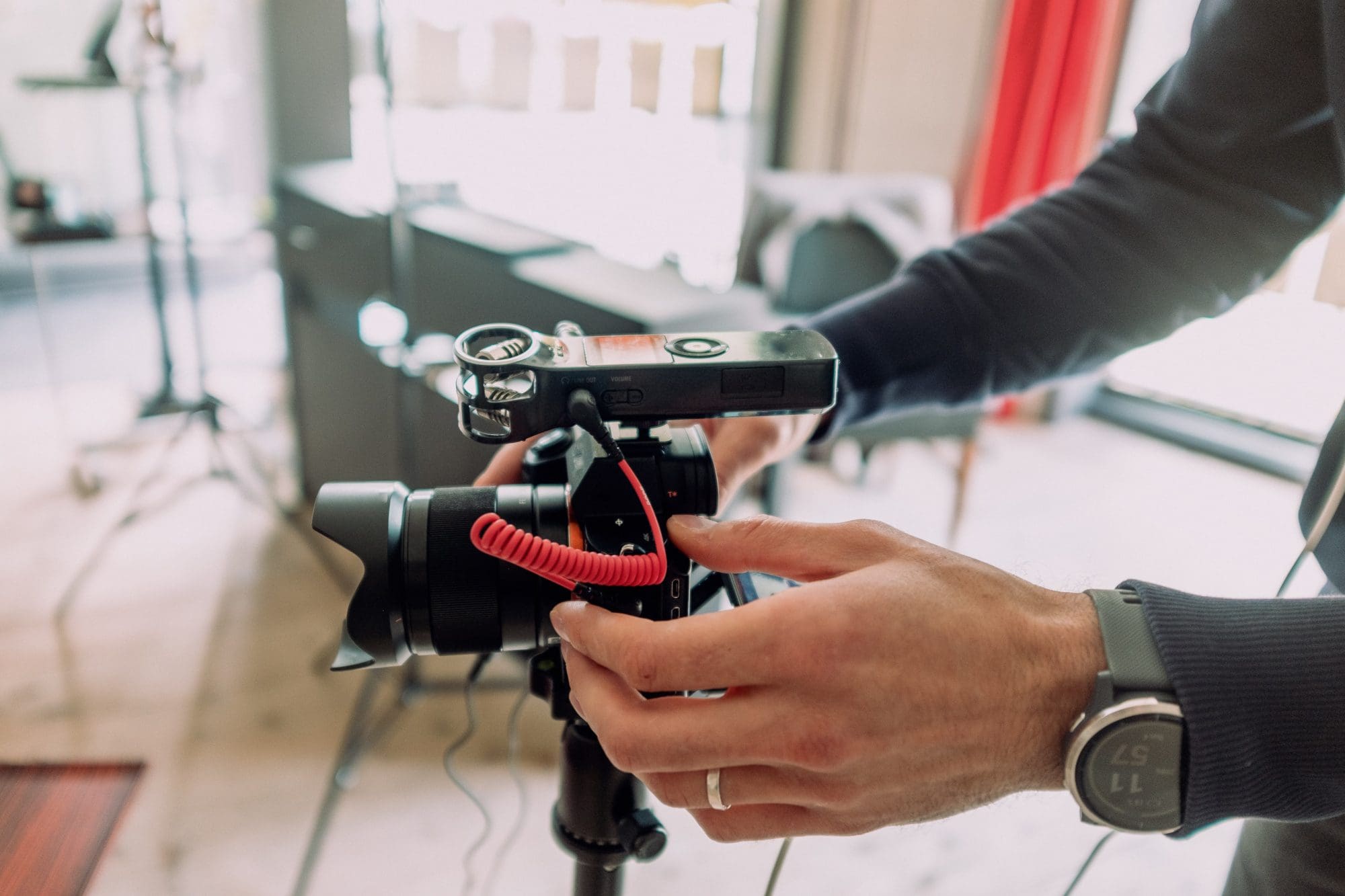
Reference videos are the fastest way to communicate a look. Words like “cinematic” and “clean” and “modern” mean five different things to five people. A 40-second link to a video you love collapses that ambiguity instantly. Send two or three, pulled from somewhere like Vimeo Staff Picks or a competitor’s site. Note what specifically you like about each: the pacing, the color, the way they used natural sound, the handheld feel.
There are two traps. The first is sending a reference shot for $200,000 and expecting it on a $4,000 budget. That Apple ad had a crew of thirty and a week of grading. If your reference is wildly out of your tier, the videographer spends the first call letting you down. That sours the whole thing before it starts. Match your references to your budget, or ask which parts of the look are realistic at your number.
The second trap is over-specifying. Dictate every shot, every transition, and every song, and you have hired an expensive pair of hands. You have also thrown away the reason you hired a professional. The best results come from a brief that is firm on goals and outcomes and loose on execution. Tell them the feeling you want a viewer to walk away with. Let them tell you how to get there. Style vocabulary is worth learning a little of. Our breakdown of wedding videography styles explains the difference between cinematic, documentary, and vintage approaches. You can borrow that vocabulary for any genre.
One more move that helps: send an anti-reference too. A single link captioned “not this, too corporate and stiff” tells a videographer as much as three positive examples. It marks the edge of the box. Editors read taste faster from what you reject than from what you praise. So give them one clear no alongside your yeses.
How the brief changes your quote
Here is the mechanical reason a video brief saves money. A videographer builds a quote from time and risk. Every unknown in your request gets padded, because the alternative is eating the cost when the unknown turns out expensive. Vague brief, big padding. Tight brief, thin padding.
Run the numbers on a simple example. You ask for “a company video.” The videographer does not know the scope. Is that a half-day or two days, one location or four, one deliverable or six? To protect themselves they quote for the worst plausible case. Call it two days at a $1,400 day rate, plus a buffer for the vagueness, landing around $4,500. Now you send a real brief. One location, one shoot day. One 2-minute hero video plus two 20-second cutdowns. Two rounds of revisions, delivered in three weeks. That is a known quantity. The same videographer quotes $2,600 with confidence, because there is nothing left to pad against.
None of this requires you to know production. It requires you to remove ambiguity. A line like “delivered as ProRes and an H.264 for the web” costs you nothing to write. It saves an email thread later. So does naming the delivery format up front: a 4K master, a 1080p social cut, captions as an SRT file. Every spec you pin down is a variable the videographer no longer has to price as a risk.
The brief also changes what happens after the shoot. Revisions are where budgets quietly bleed. When “two rounds of changes” is written into the brief and the contract, a third round is a paid add-on. You both saw it coming, so it is not a fight. When it is not written down, every round is a negotiation. For corporate work specifically, browse vetted corporate videographers who are used to working from a written brief. The good ones will ask for one if you do not offer it.
A template you can copy
Paragraphs are hard to scan on a shoot day, so keep the brief itself skimmable. Drop it into a shared Google Doc or Notion page so everyone edits the same version. Fill in each line and you have a document a videographer can quote from in ten minutes.
- Project: one line describing what this is.
- Goal: the single outcome this video must drive.
- Audience: who watches, and where.
- Deliverables: count, lengths, and aspect ratios of every finished file.
- Where it runs: each platform or screen.
- Deadline: the hard date and what it is tied to.
- Budget: a number or a range.
- Locations: how many, where, indoor or outdoor, access notes.
- References: two or three links, with a note on what you like.
- Revisions: how many rounds you expect included.
- Decision maker: the one person who signs off.
A real filled-in version might read: “Project: recruiting video for our engineering team. Goal: increase qualified applications from the careers page. Audience: mid-career software engineers, watching on desktop. Deliverables: one 90-second horizontal video plus three 15-second vertical cuts for LinkedIn. Deadline: live by March 3 for the hiring push. Budget: $6,000 to $9,000. Location: our office, one day. References: link A for pacing, link B for the interview lighting. Revisions: two rounds. Sign-off: Priya, head of talent.” That paragraph gets you an accurate quote from anyone competent.

What videographers wish you would include
The items that never make it into briefs, and cause the most grief, are the boring logistical ones. Who is on camera, and have they agreed to it. Whether there is a brand guideline or logo lockup that has to appear. Whether music has to be licensed for commercial use, which the U.S. Copyright Office spells out. Or whether the client already has a cleared track. Whether captions are needed, and burned-in or as a separate file. Each of these is trivial to answer up front and expensive to discover on the edit.
Access is the other silent budget killer. “One location” hides a lot. Is there parking for gear? A freight elevator, or three flights of stairs? Power outlets near where you want to shoot, or does the videographer bring batteries? For a real estate shoot, is the house staged and cleared? Or will the videographer spend the first hour moving laundry out of frame? The people who list on directories like ours, including real estate videographers and wedding videographers, can plan around any constraint. They just need to know about it before they load the van.
One more thing worth naming: your own review process. If your video has to clear legal, or a founder who travels, build that into the timeline in the brief. A two-week turnaround means nothing if approvals take three. Say when your decision maker is available, and the whole schedule gets honest.
Open a document right now, run down the eleven lines in the template, and answer the ones you can. The blanks that remain are exactly the questions to ask your videographer on the first call. That means your video brief has already done its second job: it told you what you do not yet know.