
An artist with 40,000 monthly listeners emails five videographers the same three lines. “Need a video for my single. Drops in six weeks. What do you charge?” Four quotes come back: $1,200, $3,400, $6,800, and $18,000. The fifth director refuses to quote until they have read a treatment. Every one of those responses is honest. Music video cost is not a single number. It is a function of how many days you shoot, how many people stand on set, and how much happens after the camera stops.
Below are the real 2026 music video cost ranges by tier, then the line items underneath them. My bias, after sitting through too many budget meetings: artists overspend on cameras and underspend on lighting and post.
What Drives Music Video Cost More Than the Camera
Artists fixate on the camera body. Producers fixate on the schedule, because the schedule multiplies everything else. A second shoot day does not add ten percent to a budget. It adds another full crew day, another gear rental day, another location fee, another catering run, and usually two more days of editing, because you shot twice the footage. Days are the single biggest lever on music video cost. A good producer will try to take one away from you on the first call.
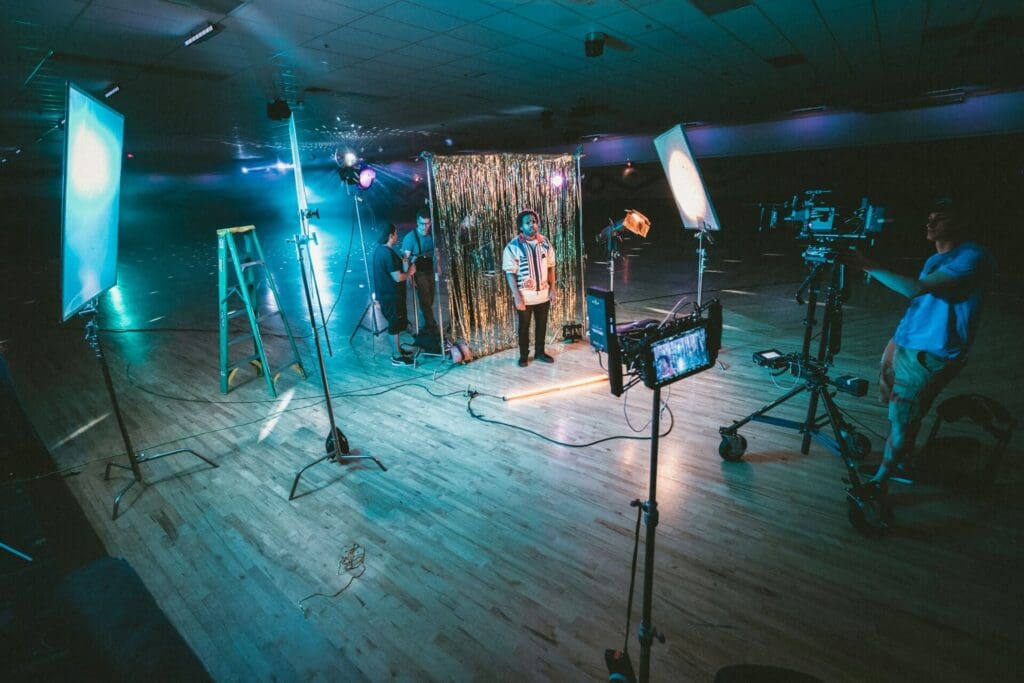
Head count comes next. A solo shooter with a Sony FX3, a gimbal, and two Aputure 600x Pro lights is a completely different cost structure than a director, DP, gaffer, key grip, 1st AC, producer, and two PAs. Each body on set runs $200 to $1,500 for the day, plus food. Nobody is padding that. Seven people simply cost what seven people cost.
Third is the complexity of the image itself. A performance shot in a parking garage at night with two lights is cheap. Eight choreographed dancers on a built set with practical smoke, a dolly move, and two wardrobe changes is not. Cast, art department, and any location you cannot walk into for free will move your number faster than upgrading from a Sony FX6 to an Arri Alexa 35. That upgrade is the one artists ask about most and the one that changes the finished video least.
Post is what clients underestimate hardest. A straightforward performance cut might be eight hours of editing. A narrative piece with 40 setups, beauty cleanup, sky replacements, and three rounds of revisions can run 40 to 60 hours before the grade even starts.
Music Video Cost by Budget Tier in 2026
Here is what the market actually looks like for independent artists and small labels. Nashville, Atlanta, and Denver sit near the middle of these ranges. Los Angeles, New York, and Toronto run 20 to 40 percent higher, almost all of it on crew and location.
- $600 to $1,800: the one-person shoot. One operator, one location, half a day to a full day, natural light plus a couple of LED panels. You get a performance video with three to five setups, delivered in one to two weeks. Most first videos live here and there is no shame in it. Plenty of songs have broken on a $900 video shot on a rooftop at golden hour.
- $2,500 to $6,500: director plus small crew. A director, a DP (or a director who shoots), a gaffer, and a PA. One or two locations, a real lighting package, a modest wardrobe and art budget, two to three weeks of post including a proper grade. Most working independent artists with an actual release plan land in this tier.
- $8,000 to $20,000: two days and a producer. Six to ten crew, casting for extras or a love interest, a producer handling permits and insurance, a grip truck, and a camera package like a Red Komodo X or a Sony Venice 2. Concept-driven work with a treatment, a shot list, and a call sheet that goes out 48 hours ahead.
- $25,000 to $75,000: label-backed. Stage rental, an art department build, a choreographer, specialty rigging or stunts, a real VFX line, and sometimes a second unit. Turnaround runs four to six weeks.
- $100,000 and up: major label singles with a marketing campaign attached. If you are reading a pricing guide, you are not in this tier yet, and that is fine.
The step that buys the most visible quality in music video cost is the jump from $1,800 to $3,500. That money hires a gaffer and a stylist, who change more frames than any camera upgrade above.
What the Crew Actually Costs Per Day
Crew is where music video costs stop being mysterious. These are 2026 day rates for a 10 hour day, with overtime at 1.5x after hour 10, in mid-size US markets.
- Director: $800 to $3,500, higher if they are also writing and boarding the treatment
- Director of photography: $700 to $1,600 without gear, $1,200 to $2,800 with a camera package
- Gaffer: $500 to $800. Key grip: $500 to $750. 1st AC: $450 to $700
- Producer: $600 to $1,400. Production assistant: $200 to $325
- Hair and makeup: $500 to $950. Wardrobe stylist: $600 to $1,300, plus a pull fee and rental costs
Gear rides on top of that. A Komodo X package with three primes, media, and support runs $450 to $750 a day. An FX6 kit is $250 to $400. An Alexa Mini LF with a set of Cooke or Zeiss glass will be $1,200 to $2,000 daily from a rental house. Most houses also run a three-day-for-a-week rate, which quietly makes a two day shoot cheaper than you expect. Ask for it. They will not offer it.
Catering is not a rounding error. Budget $22 to $35 per person per meal, plus craft services. On a 12 person crew that is $400 to $600 a day. Skipping it is the fastest way to lose good people who would otherwise come back and work at a favor rate on your next video.
Locations, Permits, and the Line Items Nobody Quotes
Location is the part of music video cost that almost nobody quotes accurately. A Peerspace or Giggster listing for a loft or warehouse runs $85 to $300 per hour with a four hour minimum. Most hosts require a certificate of insurance naming them as additionally insured. That COI comes off a general liability policy, usually $1 million per occurrence and $2 million aggregate. Expect $600 to $1,400 a year, or $150 to $350 for a short-term production policy.
City film permits run $75 to $600 for a basic video permit, but the add-ons stack fast:
- Street closure or traffic control: an off-duty officer at $85 to $150 an hour, four hour minimum
- Fire safety officer for open flame, pyro, or heavy haze: $60 to $120 an hour
- Grip truck and base camp parking: metered bagging fees per space, per day
- Neighborhood notification letters, required in some cities 48 hours ahead
Aerial shots are their own conversation. Drone footage in a commercially released video has to be flown by a pilot certificated under the FAA’s Part 107 rules for commercial drone operators. A half day with pilot and aircraft is $450 to $900. In controlled airspace near an airport, LAANC authorization is usually instant, but it is not guaranteed. Build a ground-only backup into the shot list. Directories of aerial and drone specialists list pilots with current certification and their own liability coverage, which keeps them off your policy.
Then there is the day-of spend: a $180 fog machine rental, $240 of practical bulbs and gels, a rideshare for a stylist whose car died. A ten percent contingency is not padding. It is the line that stops you paying out of pocket at 11pm.
What Post-Production Adds to a Music Video Budget
Post is half the music video cost and gets a tenth of the attention. Editing a performance-driven video with three or four setups runs $500 to $1,500 for an independent project, or it is folded into a director’s flat rate. Narrative work with multiple locations, cutaways, and a story that has to land in three and a half minutes runs $1,500 to $4,000.
Shoot every performance take to the same reference track at the same tempo, and label the files as you go. An assistant who does that properly saves an editor four hours of scrubbing waveforms in DaVinci Resolve.
Color grading is $600 to $2,800. A quick pass sits at the bottom of that range. The top is a colorist working power windows, skin qualification, and shot matching across two days of inconsistent light. Shoot on a stage and the grade goes faster and cheaper. Shoot outdoors from 2pm to sunset and you are paying for matching work either way.
VFX and cleanup are billed per shot. Rig or boom removal is $75 to $200. Beauty retouch on a close-up is $150 to $450 a shot. Sky replacement, screen inserts, and set extensions start near $400 and climb from there. Get a shot-by-shot VFX estimate before you approve any treatment that needs them.
Deliverables are the cheapest thing on this list and the most useful. A 9:16 vertical cutdown, a 15 second teaser, and a looping snippet for release day are $150 to $400 each as add-ons. They are worth more to your streaming numbers than another camera angle. If the campaign is mostly short form, bring in someone from the social media video side alongside your director. They will deliver better platform-native cuts than a music video editor improvising them.
What You Can Cut Without the Video Looking Cheap
Cut days before you cut craft. A tight one-day schedule with a real crew beats two loose days with a skeleton one. Sit with your director and ask how many setups genuinely fit into ten hours. Then trim the shot list to that number instead of hoping.
Locations go next. Three locations means three company moves, and each move eats 60 to 90 minutes of daylight. One strong building with four distinct-looking corners reads better on screen than three mediocre spaces you rushed through.
Cast size is the third thing to look at. Every extra needs a release form, food, and someone to wrangle them. Six extras who are actually directed look better than twenty standing around.
What you should not touch is lighting, wardrobe, or color. Those three are the difference between a $1,200 video and a $6,000 one in the eyes of somebody scrolling YouTube. A cheap camera under good light, with a well-styled artist and a real grade, looks expensive. An Alexa in flat afternoon sun, with a plain t-shirt and a rushed auto-grade, does not. If the budget is genuinely small, hire a gaffer and a stylist before you rent a bigger sensor. That is the most reliable way to lower music video cost without lowering the result.
Ownership, Payment Terms, and the Contract Clauses That Matter
Ownership never shows up as a line on the music video cost estimate, but it decides what you actually bought. Settle it in writing before the deposit leaves your account. Most independent deals are structured as a license. The videographer keeps copyright in the footage and grants you unlimited use for promotion and distribution. That is normal and it is not a red flag.
It becomes a problem in three places: sync licensing, brand partnerships, and a label acquiring your catalog later. If any of those are plausible, negotiate a full buyout or a work-for-hire assignment up front. Adding it after delivery costs 25 to 50 percent of the original fee, and it costs more once the director knows you need it.
Ask about YouTube Content ID, and ask whether the director plans to post the video to their own channel or reel. Most will want reel rights, which is standard and reasonable. Ask them to hold the reel post until after your release date.
Payment is typically 50 percent to book, 40 percent on the shoot day, and 10 percent on final delivery. A kill fee clause protects both sides. Cancel inside seven days and expect to forfeit the deposit, because crew and rentals are already committed. Revisions belong in the contract as a number, usually two rounds, with extra rounds at $85 to $150 an hour.
Releases are your problem if nobody claims them. Name the party responsible for collecting signed talent and location releases from every person on camera. A video you cannot distribute because one extra never signed is a total loss. Our hiring and contract guides go deeper on the clauses worth arguing over, and the pricing overview shows how deposits are normally staged.
How to Brief a Director and Get Comparable Quotes
Five vague emails produce five incomparable numbers. The brief is the cheapest tool you have for controlling music video cost, because an identical package sent to every director makes the differences readable. Include the track itself, not a description of it.
A brief that gets real quotes contains:
- The finished or near-final track as a private link
- Three to five reference videos, each with a note on what you want from it: the lighting, the pacing, the color
- Your release date, your shoot date window, and your budget as a range
- Deliverables: main video runtime, aspect ratios, number of cutdowns, delivery deadline
- Who is providing wardrobe, and whether you already have a location
State the range. Directors who cannot work inside it will tell you within a day instead of ghosting you for two weeks. Holding the number back does not get you a better price. It gets you a quote built for a video you did not ask for.
When quotes come back, compare structure rather than the bottom line. How many shoot days? How many crew? Is gear included or a pass-through rental? Is color included or an add-on? A $6,000 quote with two days, a grip package, and four deliverables is cheaper than a $4,500 quote for one day, no grade, and a single 16:9 export. See how the booking process works for the normal back-and-forth before money changes hands.
The practical move this week: write a one-page brief with your track, three references, your date, and your range. Send it to three directors whose reels already show the lighting style you want. Three itemized quotes will teach you more about real music video cost than any pricing article, this one included.