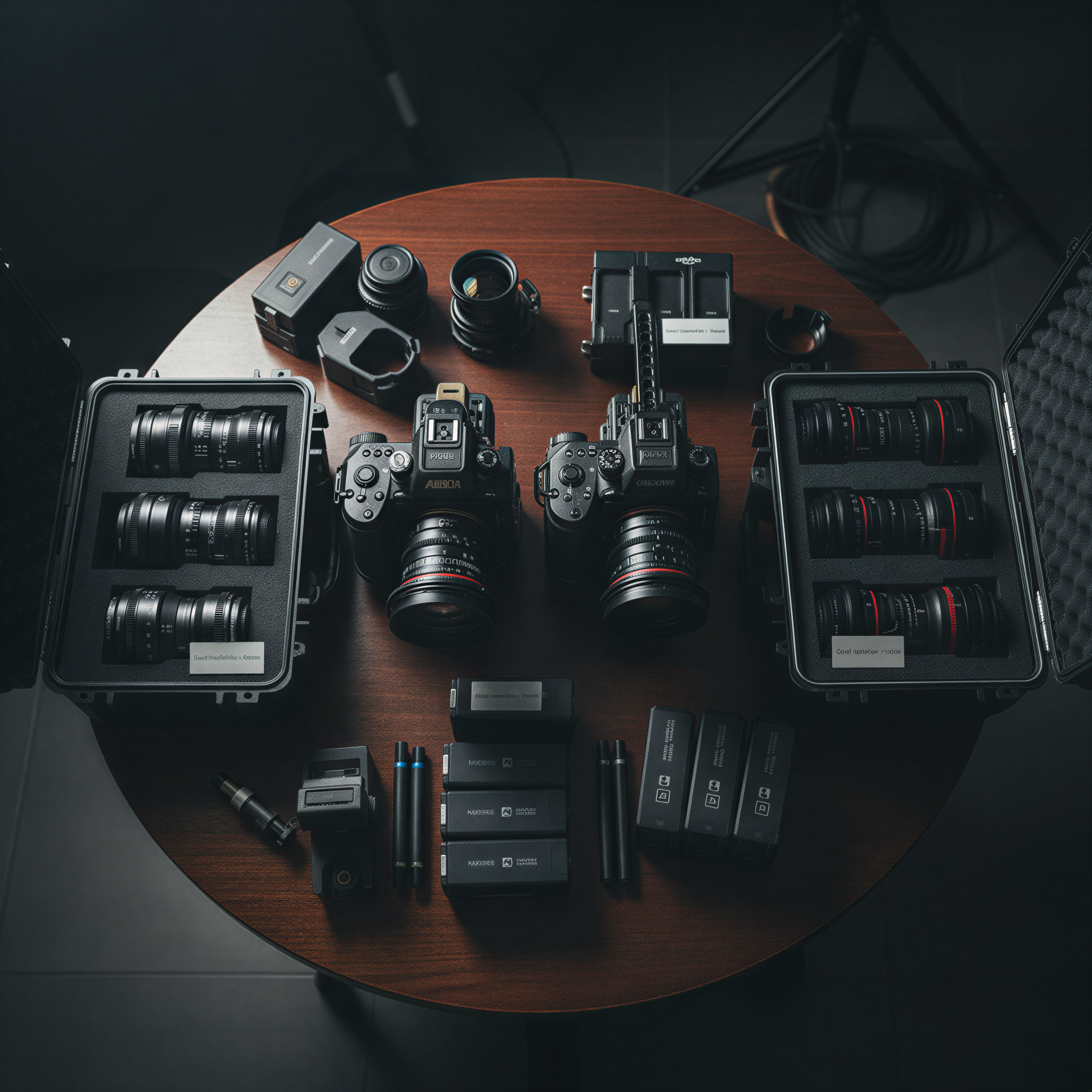
You booked a three-camera corporate interview day at $4,800. You own two bodies. The third camera plus a 70-200 runs $215 for the day from the rental house across town, or about $4,600 to buy outright. You shoot that exact configuration maybe nine times a year.
The question of whether to rent or buy videography gear never gets settled once. It gets re-answered every time your client mix shifts, a mount standard changes, or a lens sits in the closet for four months. The videographers who stay solvent are not the ones with the deepest kit. They are the ones who can tell you, without guessing, how many billable days each item put in last year.
Rent or Buy Videography Gear: The Break-Even Math
Rental houses price a camera body at roughly 1/25 to 1/30 of its new retail price per day. Lenses run steeper, closer to 1/20 to 1/25. A weekly rate is almost always three times the day rate, sometimes 3.5x. That pricing is not arbitrary. It covers depreciation, insurance, repair, and counter staff on an item that rents maybe 60 to 90 days a year.
Run the naive version first. A $4,500 body renting at $165 a day breaks even at about 27 rental days. If you will bill that body 27 days before it goes stale, buying wins on paper. Paper ignores everything in the next section, so the honest break-even sits closer to 35 or 40 rental-equivalent days. For camera bodies, plan on three to four years before resale value collapses. For lenses, tripods, and audio, plan on eight to ten.
Now apply the math per item instead of to the whole kit. A wedding shooter working 38 weddings a year puts 80-plus days on a primary body once you count engagement shoots and second-shooter work, so owning two is obvious. That same shooter uses a 300mm f/2.8 on three jobs a year. Renting it four times still costs less than one purchase, and the rental copy is always the current model. My blunt take: most people run this math on the wrong item. They agonize over a $700 rental and never question the $6,000 body sitting at 22 billable days.
What Renting Actually Costs in 2026
Here are the day rates you will see at a mid-size regional rental house this year, before tax and waivers. Anyone weighing whether to rent or buy videography gear should start here, because break-even math is worthless without real numbers.
- Sony FX3: $95 to $130
- Sony FX6: $175 to $250
- Canon C400: $250 to $325
- RED Komodo-X: $300 to $400
- ARRI Alexa 35 body: $900 to $1,400
- Sony 24-70 GM II: $45 to $60
- Five-lens Sigma cine prime set: $225 to $300
Glass is cheaper than most people expect, which is why a specialty lens rarely dents a budget. Support and lighting is where rental gets genuinely efficient. Gimbals sit around $50 to $65 a day for a DJI RS 4 Pro. Move up to an Aputure 600C Pro with a lantern and stand and you are at $85 to $110. A Nanlux Evoke 1200 with a Fresnel lands between $140 and $180. Nobody shooting eight corporate jobs a year should own a 1,200 watt fixture and the stands for it.
Two details change the math more than the sticker rate. Most houses treat a Friday afternoon pickup and a Monday morning return as one billed day. That is why weekend event and wedding videography work rents economically in a way that Tuesday corporate work never will. The second detail is the damage waiver, which adds 10 to 14 percent of your subtotal. Supply a certificate of insurance naming the house as loss payee and it disappears. On a $900 order that waiver is $110, every time. An annual inland marine policy usually pays for itself on rental jobs alone.
Peer-to-peer platforms sit 20 to 40 percent below house rates, and the tradeoff is real. You get a stranger’s copy of a lens and no counter tech to swap a dead battery plate at 7am. The meetup window may not survive traffic. Use it for a second body. Never for the only camera on a paid job.
The Costs That Never Show on the Price Tag
Depreciation is the largest line item in owning, and almost nobody budgets for it. A $6,000 cinema body sells for $3,200 to $3,600 in clean condition at the three year mark. That is $800 a year of quiet cost before you plug anything in. Lenses behave better, holding 70 to 85 percent of value. That is why the old advice about buying glass over bodies has survived every sensor generation.
Insurance on a $50,000 owned kit runs $600 to $1,400 a year depending on your state and claims history. Media is not a one-time buy either. A 320GB CFexpress Type A card is around $380, and a 512GB Type B around $260. Cards do fail, usually on the job that matters. Out-of-warranty repairs bite hardest. A sensor replacement on a full-frame body starts near $1,200. A loose lens mount is $400 to $700 with a two-week turnaround. That means renting a replacement during your busiest month anyway.
Then there is the overhead nobody invoices for: charging, cleaning, formatting, inventory, firmware updates, and the Pelican 1610s to move it all. A serious owned kit needs a vehicle that fits it and a room that stores it. If you work out of a one-bedroom apartment, the honest cost of ownership includes the closet you gave up.
One more effect is worth naming, and owners hate hearing it. Gear you own gets used because you own it. That is how a simple founder interview ends up with four cameras that all needed matching in the grade, and an edit that ran 40 percent long. Rented gear forces a decision about what the shoot actually needs.
Buy the Boring Stuff, Rent the Specialty
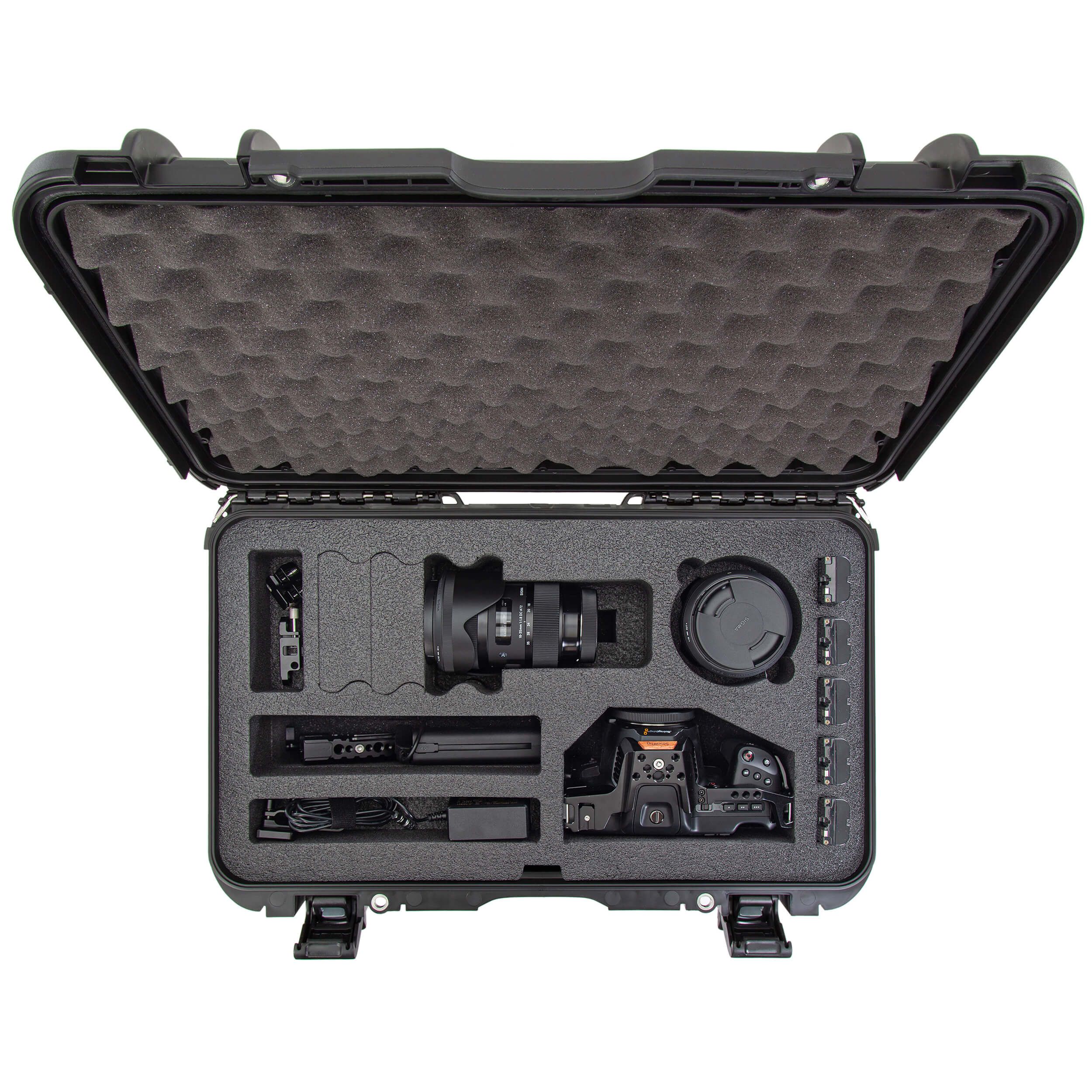
The dividing line is frequency, not glamour. Sort your kit that way and the rent or buy videography gear decision mostly makes itself. Own what touches a job most weeks, and rent what shows up on a handful of calendar dates.
Own this much, without agonizing over it:
- A primary body and a real backup body
- One workhorse zoom, usually a 24-70 or 24-105
- Your entire audio chain
- A fluid head and sticks that hold a loaded rig
- A light kit you can carry in one trip
Audio deserves a note, because renting it is false economy. A pair of DJI Mic 2 transmitters, a shotgun, and a recorder run about $1,800 all in. That chain gets used on nearly every paid job. Clients forgive soft focus long before they forgive HVAC hum on a founder interview.
Rent anything you use under roughly ten days a year, anything with a look the client asked for by name, and anything heavy. That covers anamorphic and vintage glass, large-format bodies, HMIs and 1,200 watt LEDs, techno cranes, car rigs, and any drone beyond your daily flyer. If you take occasional aerial and drone videography jobs but do not fly weekly, rent the heavy-lift platform. Owning a $12,000 aircraft that ages out of firmware support for two jobs a year is a bad trade. You still need your own certificate either way, since the FAA licenses the remote pilot, not the aircraft.
Renting is also the cheapest purchase test available. A $150 weekend rental ahead of a $6,000 decision has saved more videographers from a bad buy than any review video ever has. Shoot a real paid job on it, cut the footage, and see if the workflow annoys you at hour nine.
The one hard exception is backup on non-repeatable work. Shoot weddings and you own a second body, or you keep a same-day arrangement with a local shooter. A rental counter that opens Monday at 9am does nothing for you when a shutter dies during a Saturday ceremony.
How to Bill Gear So the Client Pays for It
On corporate and commercial work, gear is a line item and producers expect to see it. A structure like $850 for the shooter and $450 for the camera package reads as normal on an estimate. It also lets a client scale the job down without asking you to cut your rate. Anyone booking regular corporate video shoots should publish a kit fee, a lighting package fee, and an audio package fee. Then the estimate matches the scope conversation instead of trailing it.
Sub-rentals go on the estimate before the shoot, never as a surprise on the final invoice. Standard practice is cost plus 15 to 25 percent, which covers sourcing, pickup, testing, and return. Billing your own kit rate instead is equally defensible when that number is higher. What is not defensible is absorbing a $600 lighting rental into a day rate you quoted three weeks ago. Most solo shooters do that at least once a year, and it is pure margin donated to a client who would have approved the line.
Weddings work differently. Couples do not want an itemized gear list, and handing them one invites a negotiation about whether they really need the second camera. Bake equipment into the package price and talk in terms of coverage and deliverables. If you are still shaping those tiers, read how videographers price and package their work against your own numbers before the next inquiry call.
Watch the certificate of insurance requirements on both ends. Rental houses want to be named as loss payee. Larger corporate clients increasingly want to be named as additional insured on your general liability before you set foot in the lobby. Getting both issued takes an afternoon the first time and ten minutes after that.
The Tax Angle, In Plain Terms
Rental fees are an ordinary business expense, deducted in the year you pay them, with no schedule to track and no resale to worry about. Purchases are capital. Current rules let most working videographers write off qualifying equipment in year one through Section 179 or bonus depreciation. The gear has to be used more than 50 percent for business. The IRS guidance on depreciating property spells out that business-use test. Dollar caps sit far above anything a solo operator will spend, so the real limit is your net income.
Here is the part that gets misused every December. A $6,000 purchase in a 24 percent federal bracket, plus self-employment tax, saves you roughly $1,900. You still spent $6,000 in cash. Buying gear to lower a tax bill only makes sense when you were going to buy it anyway and the timing is flexible. If the item will not book days, the deduction is just a discount on a mistake.
Financing changes the picture again. Vendor financing on camera gear runs 8 to 14 percent APR for most independents, which adds $700 to $1,200 over three years on a $6,000 body. That is four to eight rental days of pure interest. Cash flow sometimes justifies it, particularly when a retainer client has already signed a twelve-month agreement. Certainty of work comes before the purchase, not after.
Sales tax is the loose end. A few states tax equipment rentals at a different rate than sales, and some treat a rental with an operator as a service instead. Ask your CPA once, write the answer down, and stop re-litigating it every quarter.
When Renting Goes Wrong, and How to Avoid It
The failure modes are boringly consistent. Late returns from the previous renter cascade into your pickup window. Bodies show up on firmware that predates the codec you promised the client. Sometimes the baseplate is missing, the batteries arrive at 20 percent, or the lens is PL when your body is E-mount and nobody added the adapter to the order. None of this is exotic. All of it costs a shoot day if you find out at call time.
Build in a buffer and work an actual checklist at the counter:
- Pick up a full day early, never the morning of the shoot
- Mount every lens and record 30 seconds to both card slots
- Confirm each accessory against the packing list before you sign
- Photograph existing damage, cases included
- On shipped orders, plan around the day before delivery, not the day of
Booking timing matters more than most people plan for. During peak wedding season and around large regional conferences, popular bodies and mid-size LED fixtures book out four to six weeks ahead. Reserve as soon as the contract is signed, then confirm 72 hours before pickup. A house holds an item for the client who calls, not the one who assumes.
For peer-to-peer rentals, meet in person, verify the serial number against the listing, and read the damage terms before agreeing to anything. Cheap gets expensive fast when a claim goes to arbitration between two freelancers with no legal budget.
Pull your last twelve months of invoices this week and tally the days each major item actually billed, not the days you carried it. Anything under ten days belongs at a rental house. Anything over forty probably belongs in your case. That one spreadsheet answers the rent or buy videography gear question more honestly than any purchase guide, and it keeps answering as your work changes. If you are still building the client base that justifies the kit, listing your services on BookVideographer costs less than any camera on your shortlist.