
You need to onboard 40 new hires a quarter, and doing it live is eating a manager’s entire Monday. So you ask three video people for a number, and you get $1,800, $6,500, and $22,000 for what sounds like the same job. That spread is not a scam. It is the honest answer to a question with at least six variables. This guide walks through every one, so your next training video cost estimate stops feeling like a dartboard.
Training video covers a lot of ground: a single talking-head explainer for a new software tool, a compliance module with scenarios and actors, a full onboarding series, or a screen-recorded walkthrough with voiceover. Each of those lives in a different budget universe. Let’s put real numbers on them.
What actually drives training video cost
The biggest lever is not camera gear. It is how much has to be built before anyone hits record. A talking-head video, where a subject-matter expert reads a script to camera, is cheap because the content already exists in their head. A scenario-based module where two actors role-play a difficult customer call is expensive, because someone has to write the scene, cast it, block it, and shoot coverage from three angles.
Roughly, these are the cost drivers, in order of how hard they hit your invoice:
- Scripting and instructional design (does the video teach, or just talk?)
- On-screen talent (staff for free, or paid actors at $400 to $900 per day)
- Number of locations and setups
- Graphics, lower-thirds, and animated diagrams
- Length and number of modules
A good producer asks about all five on the first call. If someone quotes you before asking how many finished minutes you need and who is on camera, treat the number as fiction. The same 90-second concept can cost $1,500 or $12,000, depending on whether you are pointing a camera at your ops lead in a conference room or building a scripted vignette with hired talent and a two-person crew.
The three tiers, with real numbers
Most 2026 training video cost breaks into one of three tiers, and it helps to name them so you know which one you are actually buying.
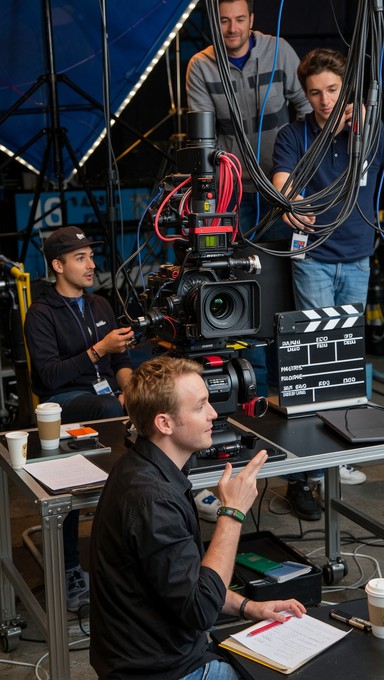
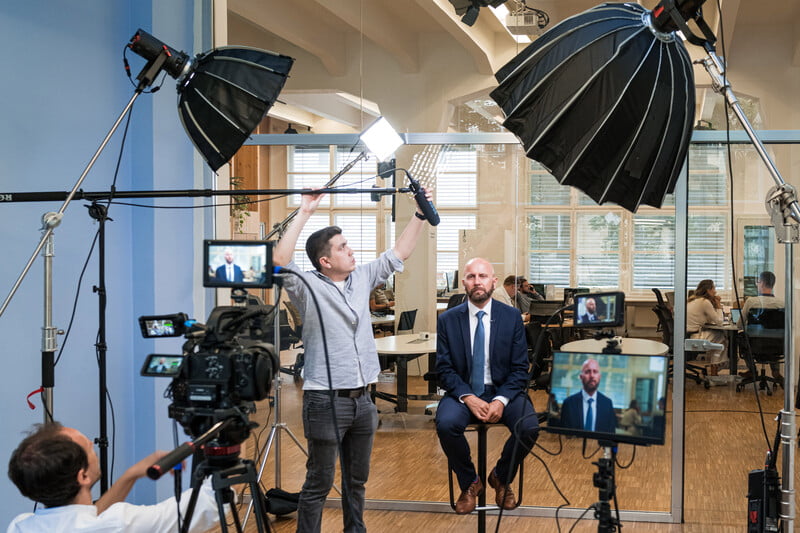
Tier one is the talking-head or simple demo: one presenter, one location, minimal graphics. Expect $1,200 to $3,500 for a finished video in the 3-to-8-minute range. This is a half-day shoot with a single operator running a Sony FX3 or a Canon C70, a couple of lights, and a lav mic. Editing takes a day or two. Most internal onboarding, tool tutorials, and policy explainers live here.
Tier two is the produced module: a script written for instruction, a mix of talking head and B-roll, motion graphics to reinforce key points, and sometimes light scenario work. Budget $4,000 to $12,000 per finished video, or $2,500 to $6,000 if you commit to a series of six or more and amortize the setup. Compliance training, safety courses, and customer-facing product education usually land in this tier.
Tier three is the cinematic or heavily scripted piece: paid actors, multiple locations, a director, scenario-based learning with branching, and polished sound design. This starts around $15,000 and climbs past $40,000 for a multi-module series. Regulated industries, healthcare, and anything customers pay to take often need this. Corporations building flagship leadership programs land here too, and you can see the type of teams that handle it in the corporate video directory.
To make that concrete, take a regional bank onboarding 200 tellers a year. A tier-one welcome video might run $2,500, a tier-two compliance module $8,000, and a single tier-three fraud-scenario film $28,000. Spread those across two years of new hires and the blended cost lands under $200 per teller, which is the whole reason video keeps winning the argument against flying trainers between branches.
The per-finished-minute number (and why raw length lies)
Plenty of buyers ask for a per-minute rate because it feels like a clean way to compare quotes. It is useful, but only if you understand what it hides. In 2026, produced training video runs roughly $1,000 to $3,000 per finished minute at tier two, and $3,000 to $6,000 at tier three. A ten-minute module at $2,000 a minute is a $20,000 project, and that math surprises people who were picturing $3,000. The vendors quoting $300 a minute are almost always counting a screen recording, not a crewed shoot, so you are not comparing like with like.
Here is the trap. Finished minutes and shoot effort are not the same thing. A 20-minute screen recording with voiceover might cost less than a 3-minute scripted scene, because the screen recording has almost no production overhead. So when a vendor quotes per minute, ask what production tier that rate assumes. A cheap per-minute number attached to a cinematic brief means one of you is about to be disappointed.
Length also fights retention. Learning research keeps landing on the same conclusion: viewers tune out of instructional video after about six minutes. If your content runs 30 minutes, the smarter and often cheaper move is five 6-minute modules. That structure also lets you update one piece later without reshooting everything. Chunking costs a little more in edit time, and it saves you a fortune on the reshoot you would otherwise eat when a policy changes.

What a real quote should include
A training video quote that only says “video production: $8,000” is hiding decisions you will pay for later. A proper scope of work names the deliverables and the boundaries. Before you sign anything, make sure the number covers these:
- Number of finished videos and their target length
- Scripting and storyboard, or whether you supply the script
- Number of shoot days and crew size
- Rounds of revisions (two is standard; unlimited is a red flag for a vague scope)
- File formats and captions for accessibility
- Music licensing and any stock footage
Captions matter more than people expect. If your training touches anyone in the US public sector or a large enterprise, the federal Section 508 accessibility standards and ADA rules mean burned-in or SRT captions are not optional. Retrofitting them later runs $3 to $8 per finished minute through a service, or more if the editor captions by hand. Get them into the scope from the start.
Revisions are the other place budgets quietly bleed. Most producers include two rounds. A stakeholder committee of eight people who each want changes will blow through that fast, so appoint one person to consolidate feedback. If you cannot, negotiate a third round upfront rather than paying hourly change fees at the end. For the full anatomy of a fair agreement, our guide on what a videography contract should include covers the clauses that protect both sides.
Animation and screen recording: the cheaper lane
Not every training video needs a camera crew. If you are teaching software, a screen recording with a clean voiceover is often the best format and the cheapest, running $500 to $2,500 for a polished tutorial depending on length and how much motion graphics dress it up. Tools like Camtasia, ScreenFlow, and Adobe Premiere with a decent USB mic get you most of the way, and plenty of freelancers specialize in exactly this.
Animated training is a different calculation. Motion graphics and character animation remove the need for a shoot, talent, and locations, which sounds cheaper, but skilled animation is labor-heavy. A 90-second animated explainer for training runs $3,000 to $10,000, and a series with a custom character system can go higher. The upside is longevity: no wardrobe or office backdrop to date the video, and updates mean editing a file instead of rebooking a studio. For processes that change often, animation frequently wins on total cost of ownership even when the sticker price is higher. Teams that focus on this style are listed under animation videographers.
A blended approach is common and smart. Shoot your subject-matter expert once for the human parts, then use screen recordings and simple motion graphics for the how-to steps. You get a face and a voice for trust, plus cheap, updatable instruction where the actual teaching happens. Most teams overspend here by filming everything, when half of it could have been a screen capture.
Freelancer, production company, or in-house
Who you hire changes the number as much as what you shoot. A solo freelance videographer charging a day rate of $600 to $1,500 is the right call for tier-one and many tier-two projects, especially recurring internal content where you do not need a big crew. You trade some capacity for a lower rate and a direct relationship, which is worth a lot when you are producing training on a schedule.
A production company bills higher because you are paying for a producer, dedicated editors, project management, and the ability to run a multi-location scenario shoot without anything falling over. For a compliance series with actors across three sites, that overhead is not padding. It is the reason the project ships on time. Expect their day rate to sit two to four times a solo freelancer’s, and expect the difference to show up in scheduling reliability and revision turnaround.
Building in-house is the third path, and the math only works at volume. A mirrorless camera, lights, audio, and editing software run a $6,000 to $12,000 startup cost, plus a salaried editor. If you are producing more than roughly 20 videos a year, in-house starts to beat per-project vendor fees, and you gain speed on small updates. Below that, you are buying gear that sits in a closet. If you are weighing this, our piece on how the hiring process works helps you decide before you commit headcount.
Timeline and hidden costs
Budget is only half the plan. A single tier-one video takes one to three weeks from brief to final cut. A tier-two series of six modules realistically takes six to ten weeks, because scripting and stakeholder sign-off eat more calendar than the shoot does. If you need it faster, rush fees of 25 to 50 percent are normal and fair, since someone is reshuffling their week for you.
The costs people forget are the ones outside the edit bay. On-camera talent who are your own employees still cost you their time off the floor. Location prep, cleaning up a messy office or renting a neutral space, runs a few hundred dollars. Wardrobe consistency matters if you plan to add modules later and want the same presenter to match. Then there are updates: a policy changes, a UI gets redesigned, and suddenly you need a reshoot. These extras are the part of training video cost that never makes it into the headline quote, so ask upfront what a single-module update runs.
Travel is the sneaky one. A crew driving 90 minutes each way bills that time, and an out-of-town shoot adds flights, a rental, and a hotel night per person. Two crew for two days out of state can quietly add $2,000 before a single frame is shot, so ask whether the quote assumes a local job. And one more line item worth naming: a royalty-free track from Artlist or Musicbed inside a subscription is fine for internal use, but if the video goes on a public site or into a paid course, confirm the license covers commercial distribution. Getting that wrong is a legal cost that dwarfs the production budget.
Getting a number you can trust
The fastest way to a real training video cost is to hand a producer three things: how many finished minutes you need, who is on camera, and where the video will live once it is done. With those three answers, most professionals will give you a range within a single phone call, and the vendors whose ranges cluster together are the ones who actually understood the brief. The outlier quote, high or low, usually means someone scoped a different project in their head.
Write your script, or at least a tight outline, before you make that call. A clear brief is the single biggest thing that pulls a quote down, because it removes the padding a producer adds to cover unknowns. Vague briefs get expensive quotes, not because anyone is gouging you, but because uncertainty has a price and you are the one paying it.
Before you commit, get three comparable bids and read past the bottom line to the scope. A $4,000 quote with two revision rounds and captions included beats a $3,200 quote that bills both back later. When you are ready to compare, browsing the corporate video directory by budget and location will surface three like-for-like bids faster than a generic search ever will.