A marketing manager emails five videographers the same brief: a two-minute brand video for the company homepage. The quotes come back at $1,800, $4,500, $6,200, $9,000, and $14,000. If video genuinely cost a fixed amount per minute, those numbers would land within a few hundred dollars of each other. They never do, and understanding why is the difference between a smart hire and a budget you regret.
The phrase you are searching for, video production cost per minute, is one of the most requested and least useful metrics in the industry. It exists because buyers want a single lever they can compare, the way you weigh price per square foot or cost per click. Video does not work that way. A finished minute is the output of a process, not a unit of raw material, and the process is where all the money lives. This guide breaks down what a per-minute figure hides, gives you real 2026 ranges anyway, and shows you how to get a quote you can actually trust.
Why video production cost per minute is the wrong question
Ask a videographer what they charge per finished minute and watch them hesitate. It is not evasion. The honest answer is that the same one-minute runtime can represent a half-day of work or three weeks of it. A talking-head clip of your CEO shot at their desk, cut down to sixty seconds, might involve one shooter, two hours on location, and a day of editing. A sixty-second commercial with a lighting crew, a hired actor, a location fee, a gimbal operator, and a color grade in DaVinci Resolve can eat four shoot days and a week of post.
Both deliver one minute. One costs $900, the other costs $18,000. Divide either by runtime and the number is meaningless the moment the next project has a different shape.
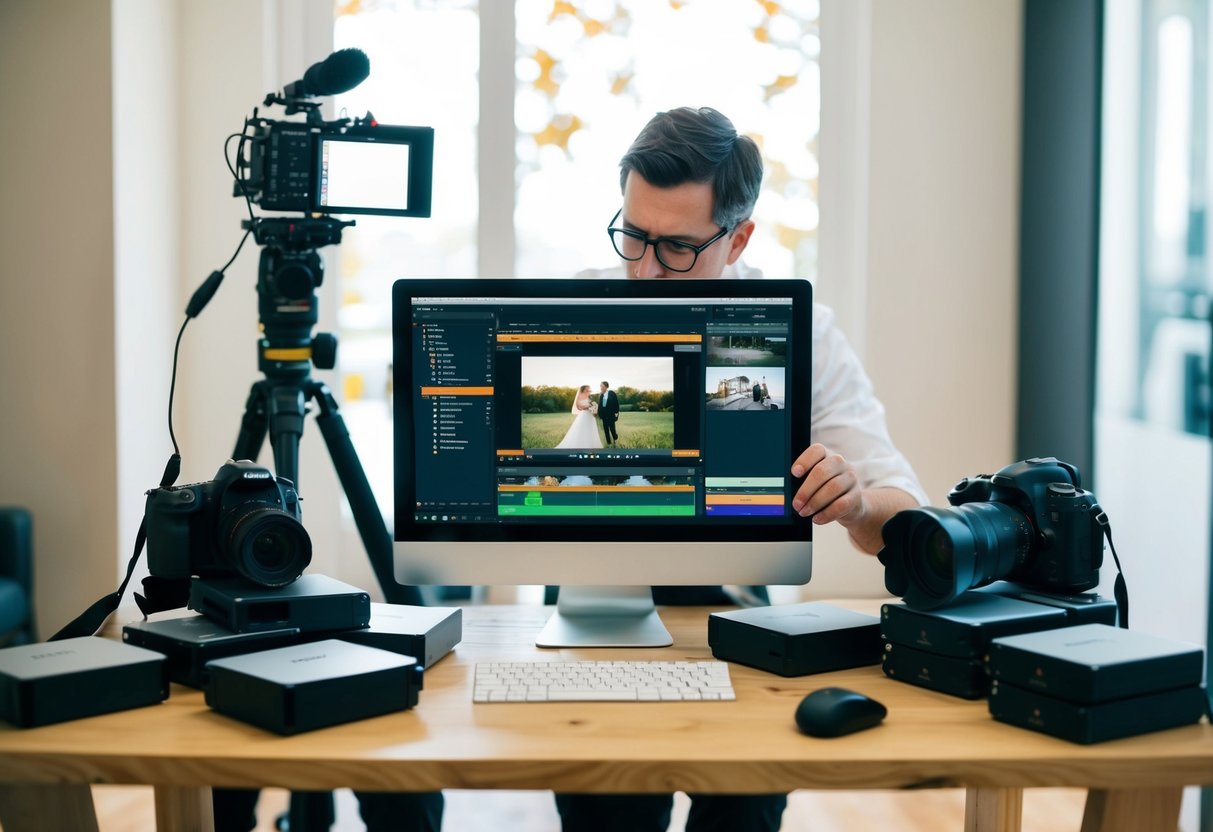
The deeper problem is that runtime and effort are barely correlated. Editors will tell you the hardest cut they ever made was a thirty-second spot, because every frame had to earn its place, and the client had opinions about all of them. A ten-minute training video with static framing and a simple lower-third can move faster through post than a punchy ninety-second promo. So when a studio quotes you “$1,000 per minute,” they are either quoting a rough average of past work or, more often, reverse-engineering the number from a total project cost they already calculated. The per-minute figure is the output, never the input.
What a finished minute actually contains
To see where the money goes, stop thinking in minutes and start thinking in phases. Every video, from a $600 social clip to a $50,000 anthem film, moves through the same three stages, and each one carries cost independent of runtime.
Pre-production is planning: the creative brief, the script or shot list, casting, location scouting, permits, and scheduling. On a small job this might be a single phone call. On a branded piece it can be two weeks of back-and-forth and a mood board that goes through four rounds before anyone picks up a camera.
Production is the shoot itself, and this is the most expensive hour-for-hour. A solo videographer with a Sony FX3, a 24-70 GM lens, and a DJI RS 4 gimbal runs a very different line item than a set with a two-person crew, an Aputure 600d lighting package, an audio operator, and a director. Production is billed in days or half-days, not minutes of final footage, because a full shoot day often yields anywhere from ten seconds to three minutes of usable material.
Post-production covers editing, sound design, licensed music, motion graphics, and color grading. Runtime finally starts to matter a little here, though even now the correlation is loose. Post is billed by the hour or by the project, and a complex thirty-second edit can bill more hours than a straightforward five-minute one. A licensed track from a stock library like Artlist or Musicbed runs about $200 a year for unlimited use, while a bespoke score written by a composer starts near $1,500, and that single choice can swing a small project’s budget by ten percent.
Real 2026 ranges, if you insist on a number
Buyers still need a starting point, so here are honest per-minute ranges for common categories in 2026. Treat these as the middle of a wide bell curve, not a price list. A tight budget pushes you to the low end with fewer shoot hours and simpler edits, and ambitious creative pushes you well past the high end.
- Social media clips (vertical, minimal crew): $300 to $1,200 per finished minute
- Corporate and internal video (interviews, training): $1,000 to $3,000 per finished minute
- Testimonial and case-study video: $1,500 to $4,000 per finished minute
- Brand films and web commercials: $3,000 to $12,000 per finished minute
- High-end commercial and broadcast spots: $10,000 to $50,000-plus per finished minute
Notice how wide each band is, and how much they overlap. A premium social campaign can cost more than a bare-bones corporate piece. The category tells you less than the production values do. If you are shopping in the corporate videographer space, a $2,000-per-minute quote and a $4,000-per-minute quote may both be fair, because one includes a second camera and a scripted edit while the other is a single-operator interview cut. The number alone cannot tell you which is which, and most buyers anchor on it anyway and get burned.
As a concrete anchor, a two-minute recruiting video with one interview day, a second camera, and a scripted edit typically lands between $6,000 and $9,000 all in. That works out to $3,000 to $4,500 a minute once you run the division nobody should fully trust.

Why a 60-second video can cost more than a ten-minute one
This is the fact that ends the per-minute conversation for good. Short, polished videos are frequently the most expensive per second of anything a videographer produces, and clients find that genuinely hard to believe until they have paid for one.
A thirty-second brand spot has nowhere to hide. Every shot competes for attention, so the shot list is dense, the lighting has to be perfect, and the client will scrutinize each cut in review. You might shoot for two days to capture the eight hero shots that survive the edit, then spend a week refining pace, sound, and color. The shooting ratio, the amount of footage captured versus used, can hit 50 to 1 or higher on that kind of job.
Compare that to a ten-minute recorded webinar or a conference recap. The camera sits on sticks, the framing rarely changes, and the edit is mostly trimming dead air and adding titles. You captured maybe fifteen minutes to keep ten. The shooting ratio is close to 1 to 1, the shoot is a single locked-off day, and post moves quickly.
So the ten-minute video might land at $4,000 total, or $400 per minute, while the thirty-second spot lands at $9,000 total, or $18,000 per minute. Same videographer, same week, wildly different math. When you evaluate quotes, ask about the shooting ratio and the number of setups, not the runtime. Those two numbers predict cost far better than length ever will. This is also why a brand film specialist and a corporate generalist can quote the same runtime and land thousands apart.
The real cost drivers behind every quote
If runtime is not the lever, what is? Five factors move a quote more than anything else, and knowing them lets you read a proposal like a professional rather than a shopper.
- Shoot days. This is the single biggest driver. A solo shooter’s day rate in 2026 runs roughly $800 to $2,500, and a full crewed day with lighting, audio, and grip can pass $8,000 before anyone touches the edit. Two shoot days instead of one can double the production line item regardless of how much footage ends up in the final cut.
- Crew size. Every extra person on set is a day rate plus, often, a meal and a travel cost. A gaffer, an audio engineer, a second camera operator, and a producer each add real money, and they add it whether the video runs ninety seconds or nine minutes.
- Gear and grade. Aerial coverage means a licensed drone operator: the FAA requires a Part 107 remote pilot certificate for any paid flight, which is why many buyers cross-shop drone videographers separately. A cinema camera package, a specialty lens set, or a professional color grade in Resolve all raise the floor.
- Talent and licensing. Hired actors, voiceover artists, and stock or licensed music carry fees, and usage rights scale with how widely you plan to run the video. A clip for internal training is cheaper to license than the same clip cut for a paid national ad.
- Revisions and turnaround. A three-day rush costs more than a three-week timeline, and an open-ended revision policy costs more than a capped two-round one. Always confirm how many rounds of changes the quote includes before you sign, because this is where cheap quotes hide expensive surprises.
How to get an accurate quote instead of a per-minute guess
Stop asking for a per-minute rate and start giving the information that lets a videographer scope the job. The quality of your quote is a direct function of the quality of your brief. A vague request produces a padded estimate, because the videographer has to price in the uncertainty.
Tell them five things up front: the purpose of the video and where it will run, the approximate final runtime, whether you need scripting or just editing, how many locations and shoot days you imagine, and your actual budget range. That last one makes people nervous, but sharing it saves everyone a week. A good professional will tell you honestly what $5,000 buys versus $15,000, and steer you toward the version that fits.

Then ask the questions that surface hidden cost. How many shoot days does this scope require? How many crew? How many revision rounds are included, and what does an extra round cost? Who handles music licensing and usage rights? What is the turnaround, and is there a rush fee? A videographer who answers these clearly is one you can plan a budget around. One who only wants to give you a per-minute number is either inexperienced or hoping you will not ask what it includes. If you want to compare a few professionals on scope rather than guesswork, our how it works page walks through the request-and-quote flow, and the pricing overview shows where common project types land.
If you are the videographer, should you ever quote per minute?
From the other side of the camera, per-minute pricing is a trap you can occasionally use on purpose. For repeatable, tightly-scoped work, a per-minute or per-deliverable rate can speed up sales and set clear expectations. If you produce social clips at volume, quoting $500 per finished thirty-second vertical is cleaner than re-scoping every order, and clients like the predictability.
The danger is applying it to bespoke work. The moment a project has variable shoot days, crew, or creative ambition, a per-minute rate either overcharges the simple jobs and scares clients away, or undercharges the complex ones and quietly bankrupts you. The fix is to price the process, not the runtime. Build your quote from day rates, crew costs, post hours, and licensing, then, if the client insists, divide by runtime at the end so they get their comparison number. You have protected your margin and given them the metric they wanted.
Understand your true costs first. Know your day rate, your average edit hours per project type, and your overhead, and the per-minute figure becomes a reporting output rather than a pricing input. If you are building this side of your business, listing on a directory that connects you with buyers who already understand scoped quotes beats competing on a race-to-the-bottom per-minute rate.
The next time someone asks you for a video production cost per minute, treat it as the start of a conversation, not the answer. Ask what the video is for, how many days it takes to shoot, and how ambitious the edit needs to be. Those three answers will tell you more than any per-minute chart ever printed, and they will get you a number you can actually stand behind.