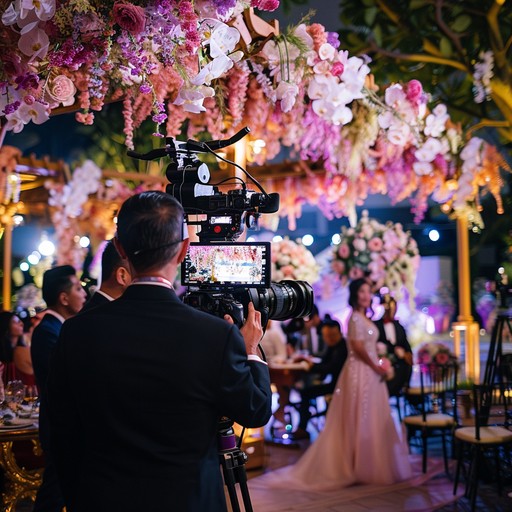
The ceremony started 40 minutes late because the bride’s car got stuck in traffic. Now it is 11:15pm, the reception was booked to end at 11, and your videographer is still rolling on the last dance. Nobody talked about what happens next. The invoice that lands two weeks later has a line item you did not expect: three hours of overtime at $250 an hour.
Videographer overtime rates are one of the most common sources of billing friction on a shoot, and almost all of it traces back to a conversation that never happened. This guide covers how overtime gets triggered, what working videographers actually charge for it in 2026, and how both sides can keep the final number predictable.
What actually counts as overtime
Overtime is any coverage beyond the hours written into your package or contract. That sounds obvious, but the trigger point is where people get burned. If your wedding film package says “8 hours of coverage,” the clock usually starts when the videographer begins shooting, not when they arrive to set up. Some contracts start it at the call time listed on the schedule regardless of when the camera turns on. Read which one you signed.
The distinction matters more than most clients realize. A shooter who arrives at 1pm to grab detail shots of the dress and rings, then covers a ceremony at 4 and a reception until 11, has logged 10 hours even though the event felt like it ran from 4 to 11. On a corporate or event job, overtime is often measured against a hard call sheet: in at 8am, wrap at 6pm, ten hours, anything past that bills at the overtime rate.
Travel to and from location is usually handled as a separate travel fee that often tracks the IRS standard mileage rate, not overtime, though a few shooters roll a portion of drive time into the billable day. Ask which model your videographer uses before you sign, not after the shoot runs long.
A quick way to see which clock you are on:
- Coverage-based: billing starts at first shot and ends at last shot.
- Call-time-based: billing starts at the time on the schedule, setup included.
- Hybrid: a flat travel fee plus coverage hours, with drive time excluded.
Get that one detail confirmed in the contract and half the overtime arguments disappear before they start.
Typical videographer overtime rates in 2026
Most videographers set an overtime rate that is higher than their blended hourly rate, and they do it on purpose. A wedding shooter whose 8-hour package works out to roughly $200 an hour will often bill overtime at $250 to $400 per hour. Event and corporate crews commonly land at $150 to $300 per person, per hour. That number stacks fast when you still have a two or three person crew on the clock. The last hour of a 12-hour day is the most expensive one to give: it is fatigue, it is a later edit start, and it is the hour that pushes a shooter past what they planned their week around.
Here is how the ranges tend to shake out across common job types:
- Solo wedding videographer: $250 to $400 per hour, sometimes billed in 30-minute increments after the first full hour.
- Two-person wedding team: $350 to $600 per hour combined, because you are paying for both shooters.
- Corporate or commercial crew: $150 to $300 per person per hour, plus gear and sometimes a bumped rate for high-end shoots.
- Event and conference coverage: $175 to $350 per hour, often with a minimum overtime block of one or two hours.
Those are working numbers, not quotes. A videographer in a major metro with a full second-shooter crew and rented cinema glass will sit at the top of every range. A solo operator in a smaller market usually covers overtime at a rate that still feels fair to both sides. Most couples overspend here by guessing high out of fear, so if you want to see how base packages are structured before overtime enters the picture, our pricing overview breaks down what a standard day usually includes.
Why overtime costs more than the base hourly rate
Clients sometimes push back on videographer overtime rates, and the logic is understandable. If you paid $1,600 for eight hours, why does the ninth hour cost $300 instead of $200? The honest answer is that the base package is a bundle, and the bundle is priced to include the parts of the job you never see.
A typical delivered wedding film represents 30 to 50 hours of editing behind a single day of shooting. When a videographer prices an 8-hour package, that editing load is baked into the number, along with gear depreciation, insurance, backup drives, and the cull-and-color time. The base hourly figure is an average across all of that, not the cost of standing in a room with a camera. An extra hour on set does not just add 60 minutes of shooting. A full day on a Sony FX6 or a pair of A7S III bodies can throw off well over 500GB of footage, and every one of those extra hours has to be offloaded, backed up, reviewed, and cut in Premiere or DaVinci Resolve.
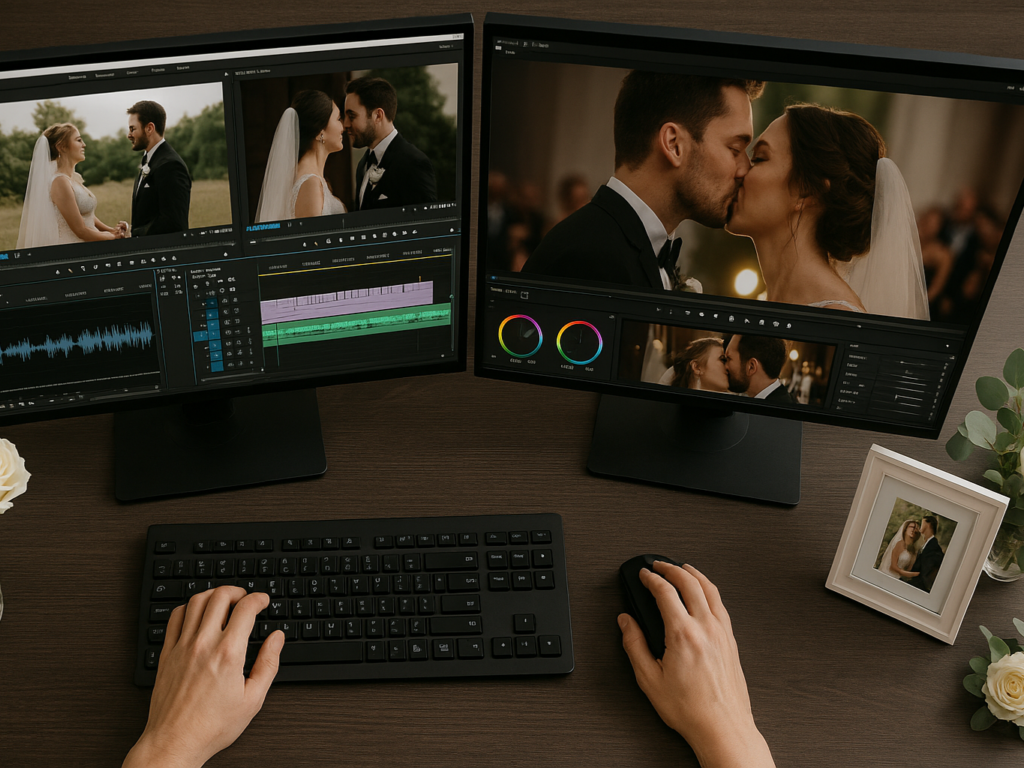
There is a scheduling reality too. A shooter who planned to wrap at 11 and be editing a different client’s project the next morning now starts late, and that ripple hits the whole week. Run the math on a real Saturday. A shooter who leaves at midnight instead of the planned 11 imports and backs up that footage on Sunday morning, pushing a Monday delivery to Tuesday. If the next couple in the queue was promised a sneak peek by Wednesday, one extra hour on Saturday quietly eats into three other clients’ timelines. The overtime premium is partly compensation for that disruption, not just the extra labor. Understand it going in and the $300 line item reads as a policy rather than a penalty.
How overtime gets triggered on wedding days
Weddings run late. That is not a risk, it is the base case, and experienced wedding videographers build their day around the assumption that something will slip. Hair and makeup runs 45 minutes over. The ceremony starts late. Speeches that were meant to take 20 minutes stretch to an hour because the best man had four drinks and a lot to say. Each of those pushes the timeline, and coverage that was supposed to end at the send-off now extends into overtime territory.
The most common trigger is a client asking for “just a little more” in the moment. The band announces one more song, the couple wants the sparkler exit filmed, and the videographer standing right there is not going to pack up and miss it. Good shooters will usually shoot the moment and sort out the billing later. That is also exactly how you end up surprised by the invoice. If you know your reception has a real chance of running long, the cleaner move is to build a buffer hour into the package up front. It is often cheaper there than at the in-the-moment overtime rate.
A short list of the moments that most often push a wedding past its coverage window:
- A ceremony that starts 20 or more minutes behind schedule.
- Extended toasts and speeches during dinner.
- A late grand exit or sparkler send-off added after the timeline was set.
- “One more song” from the band or DJ near the end of the night.
Getting overtime terms in writing before you book
The single best protection against an overtime surprise is a contract clause that spells out three things: the trigger point, the rate, and the increment. You want to know when the clock starts, what each extra hour costs, and whether it bills in full-hour or half-hour blocks. A vague “overtime billed at prevailing rates” line is not good enough, and any videographer contract worth signing will name an actual number. A clean clause reads something like this: coverage begins at first shot, overtime bills at $300 per hour in 30-minute increments after the first 15 minutes, and no overtime accrues without text approval from the planner on file.
Ask these questions before you put down a deposit. Does coverage start at your call time or at first shot? What is the per-hour overtime rate, and does it change after midnight? Is there a maximum, or does it run open-ended until wrap? For a multi-person crew, is the rate per person or a single combined figure? Getting those answers in writing turns videographer overtime rates from a gray area into a known, capped cost you can decide about in advance.
There is a consent piece too. The strongest contracts require the videographer to get verbal or text confirmation from a designated person, often the couple’s planner or a parent, before the overtime clock starts running. That way nobody is billed for hours they did not knowingly authorize, and the shooter is protected from a client who later claims they never agreed. If you are hiring through a directory, our how it works page explains what to confirm before money changes hands.
When overtime is the smart choice, and when it is not
Overtime is not automatically a rip-off, and it is not automatically worth it either. Sometimes the extra hour buys you the single best moment of the film. The sparkler exit, the surprise last dance with a grandparent, the after-party that turned into the most genuine footage of the night: those can be worth $300 without a second thought. If the moment is irreplaceable and you will regret not having it, pay the overtime and move on.

The calculus changes when overtime is buying you more of something you already have plenty of. A third hour of open-dancing coverage rarely makes the final cut better, because a good editor only uses a couple of minutes of dance floor footage anyway. If your videographer is running long simply because the event has no hard stop, it is fair to call the wrap yourself. You are allowed to say “we are good, you can pack up” at the point where more footage stops adding value. A working shooter will respect that, because they would rather wrap on time than pad a bill.
For corporate and event work, the smart-versus-not question is usually about whether the extra coverage serves the deliverable. If the keynote ran long and you need the whole thing, that overtime is non-negotiable. If a panel is repeating points you already captured, there is no reason to keep two cameras rolling. The test is always the same: does this hour change what you can actually deliver, or does it just extend the day?
How to avoid overtime entirely
The cleanest way to control videographer overtime rates is to not trigger them, and most of that happens in planning. Build a timeline with real buffers, not optimistic ones. If your ceremony is scheduled for 4pm, assume it starts at 4:15 and pad accordingly. Share the finished timeline with your videographer a week out so they can flag where the risk is, and give them a hard end time so they know what they are shooting toward.
Booking a slightly longer package up front is almost always cheaper than in-the-moment overtime. If you are genuinely unsure whether 8 hours covers your day, book 9 or 10 at the package rate rather than gambling on the higher overtime figure. Many shooters will also offer a split package, morning prep plus evening reception, that skips the low-value middle hours and keeps you inside your coverage window. If you want help scoping the right amount of coverage before you commit, reach out with your timeline and describe the day.
Honest communication on the day itself closes the gap. Designate one person who is empowered to approve overtime, tell your videographer who that is, and make sure everyone knows the coverage end time. When the band announces one more song at 10:55 and your package ends at 11, that designated person can make a fast, informed call instead of everyone assuming someone else authorized it.
If you take one thing from this guide, make it this: ask for the videographer overtime rate and the trigger point in writing before you sign, then build a timeline that gives you a real chance of never using either.