
Your wedding was the second Saturday in June. It is now late September. The only update from your videographer was a one-line email in August saying the edit is “still in the queue.” Before you fire off an angry follow-up, it helps to know what a normal wedding video turnaround time looks like. Those weeks go somewhere specific, and it is not a shelf.
What counts as a normal wedding video turnaround time
There is no single number, because “the video” is usually three or four separate deliverables with very different edit loads. Here is what most working wedding shooters in the US quote in 2026:
- Social teaser, 45 to 90 seconds: 3 to 14 days after the wedding
- Highlight film, 4 to 8 minutes: 8 to 12 weeks
- Full ceremony and speeches, lightly edited: 10 to 16 weeks
- Feature or documentary cut, 20 to 90 minutes: 12 to 20 weeks
- Raw or lightly organized footage on a drive: 2 to 6 weeks
Those are calendar weeks from the wedding date, not from the day the editor opens the project. A solo shooter who films and edits alone lands at the slow end: 12 to 16 weeks in peak season. A studio with two staff editors and an assistant handling ingest can hold 6 to 10 weeks year round. Cutting is somebody’s full-time job there, not a Tuesday night task squeezed in after a client meeting.
Price does not predict speed the way couples assume. A $1,500 package with one camera, a single lav recorder, and a four-minute edit can turn around in five weeks. There is simply less material to sort. A $9,000 package with three shooters, a drone, custom sound design, and a 70-minute feature can honestly take four months. At the top end you are paying for complexity, and complexity takes hours. Most couples read a long wedding video turnaround time as sloppiness when it is usually the opposite. If you are still comparing options, most wedding videographers will state their current queue on a call before you sign.
The number that should worry you is not 14 weeks. It is silence. Someone who wrote 16 weeks into the contract and delivered in week 15 did exactly what they promised. Someone who quoted 8 weeks, went quiet in week 10, then answered every third email has a communication problem. That is a different and more serious thing. Judge a wedding video turnaround time by the gap between promise and delivery, not by the raw week count.
Where the weeks actually go on a single wedding edit
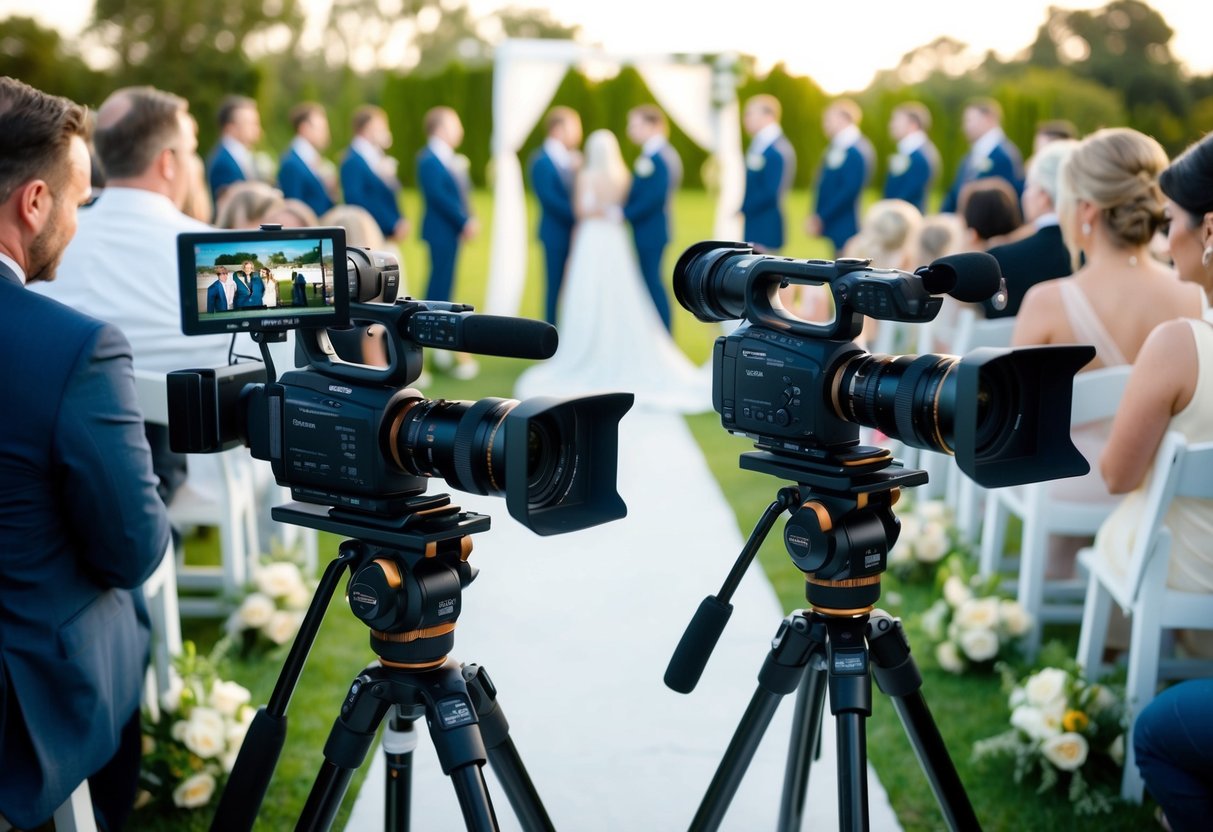
Couples underestimate the edit by a factor of five. A typical eight-hour coverage day yields 600 GB to 1.2 TB of files: two Sony FX3 bodies, a third camera locked off at the ceremony, two Tascam DR-10L lavs on the officiant and one partner, a Zoom F3 patched into the DJ board, and a drone pass over the venue exterior. Anyone flying that drone for pay needs a Part 107 remote pilot certificate from the FAA. Worth confirming before you book. All in, that is six to nine hours of footage for a six-minute film.
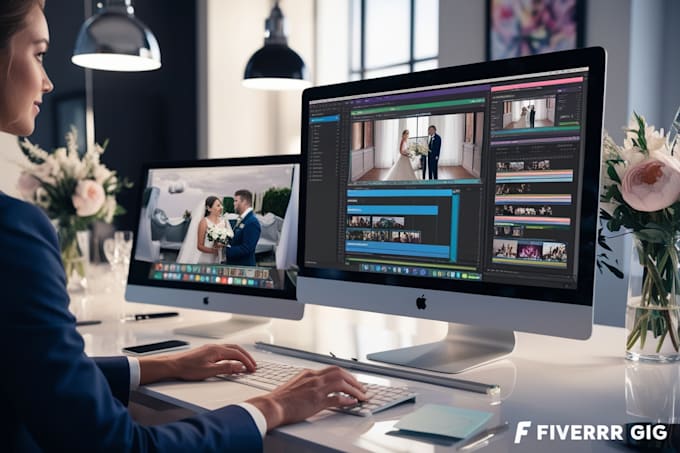
Broken into real hours, one highlight film looks like this:
- Ingest and verified backup to two drives plus a cloud copy: 2 to 4 hours, mostly unattended
- Multicam sync of ceremony and speech angles against the lav and board audio: 2 to 3 hours
- Culling seven hours of footage down to 25 minutes of selects: 4 to 6 hours
- Music search and licensing: 1 to 3 hours, on top of a $200 to $400 annual Musicbed or Artlist subscription, or $50 to $120 for a one-off track
- First assembly of a six-minute piece: 8 to 12 hours
- Color: 3 to 5 hours
- Audio mix: 1 to 2 hours
- Export, quality check, upload, and gallery setup: 1 to 2 hours
Culling is the brutal part, and it is the step that decides whether the film is any good. Color runs long whenever a reception has tungsten uplighting fighting daylight windows and an LED dance floor wash. Nobody warns couples that a purple uplight package adds an hour to the grade, but it does.
Add one revision round and the highlight alone is 25 to 40 hours. That is before anyone opens the feature edit, which adds 10 to 20 more. On a $3,200 package, editing labor exceeds shooting labor by a wide margin. Which is why “it has just been sitting there” is rarely what is happening. The project is in a line, and the line is real. A wedding video turnaround time quote is a queue estimate before it is anything else.
Why a September wedding waits longer than a March wedding
A full-time solo wedding shooter books 25 to 35 weddings a year. Roughly 60 percent land between May and October. In September and October that means four or five weddings a month. Sometimes a Friday, a Saturday, and a Sunday in the same weekend. Five weddings generate about 150 hours of editing. The same person also spends 45 hours on site that month, plus travel and sales calls. Then there are the July couples asking where their films are.
The arithmetic does not close in season. Nobody edits 150 hours a month while shooting every weekend. The backlog builds from May through October and gets paid down between November and February. That is when a shooter has two weddings booked and four clear weeks at the desk. Same videographer, same contract: a March wedding delivers in six weeks and an October wedding in fourteen. That is the whole reason a wedding video turnaround time can swing by two months across one calendar year.
That seasonal swing is the part almost nobody asks about, and it beats any promise on a website. Three questions get you a real answer before you book:
- How many weddings do you have the month of my date?
- What did your last three couples from that month actually wait?
- Who does the editing, you or a staff editor?
A shooter with 22 weddings on the calendar will tell you straight. A flat eight weeks for every date on the calendar means one of two things. Either there is a real team with staff editors behind it, or nobody has done the math.
If your date falls in the crush, plan around it instead of fighting it. Ask for the teaser in writing as its own deliverable with its own deadline. Push to have the feature edit scheduled for January rather than promised for November and missed. A realistic wedding video turnaround time you can plan around beats an optimistic one you spend the winter chasing. You can see how availability tends to cluster across a season when you look at how booking works.
What a rush delivery actually costs
Rush pricing runs 25 to 50 percent of the package value, or a flat $500 to $1,200. The number depends on how far ahead of the queue you want to jump. In plain terms, you are buying back a wedding video turnaround time you already agreed to. That premium is not arbitrary. Pulling your wedding forward pushes someone else’s back. The editor is either working nights or absorbing a complaint from another couple. Some shooters refuse outright, and that is a defensible answer rather than a red flag.
What you get for the money varies enormously, so ask specifically. A genuine rush moves your project to the front of the queue. It gets the same treatment it would have received in week twelve. A cheap rush means a lighter grade, a stock track instead of your chosen song, and a 72-hour revision window. Get that answer in an email, not on a call.
Rush fees earn their keep against a real deadline: a partner deploying in eight weeks, a grandparent in hospice, an anniversary party already booked, a spousal visa filing that wants documentation of the ceremony. They make far less sense for posting to Instagram sooner. Most couples who pay a rush fee are buying two weeks of impatience for $800.
If speed is the actual goal, negotiate the teaser instead. A 60-second cut inside two weeks costs the shooter about 90 minutes. Most will do it free or close to it. It feeds their own marketing while your wedding is still the newest thing on the feed.
The contract clauses that decide your delivery date
Read the delivery language before you sign, because it is where nearly every dispute starts. “Delivery within 120 days of the event date” is enforceable. “Typical turnaround is 8 to 12 weeks” is an estimate with no teeth. A videographer who words it that way has left themselves unlimited room. A wedding video turnaround time only means something when it is a date, not an adjective.
Four things are worth checking line by line:
- Business days versus calendar days. Ninety business days is over 18 weeks, which is not what anyone pictures.
- When the clock starts. Plenty of contracts start counting at your song submission or your final payment, not at the wedding. Take five weeks to pick music and five weeks are on you.
- The remedy if the window is blown. A fair clause reads: if delivery exceeds the stated window by more than 30 days, the client receives a 10 percent refund, plus 5 percent for each additional 30 days, capped at 50 percent. Few contracts include this unprompted, but plenty of shooters will add it if you ask before signing.
- Hosting and archive terms. Most galleries stay live for 12 months, after which retrieval runs $100 to $250. Some studios delete raw media at 90 days.
Confirm the revision terms in the same section. One round included, submitted as consolidated notes within 14 days of delivery, is the common standard and a fair one. Notes that arrive in three separate emails over a month restart the queue problem from the beginning. The second wait is the one couples remember. The wedding video turnaround time in your contract is only as good as the definitions wrapped around it. Delivery windows and revision rounds come up constantly, and our FAQ page covers both in more depth.
What to do when your wedding video is late
Start from the assumption that your editor is buried and slightly ashamed. Eight times out of ten, that is the situation. A hostile email at week thirteen makes things slower, not faster, since the editor now dreads opening your project. Send something short and specific instead: “We are at week 14 against a 12-week contract. Can you give me a hard delivery date, and a 30-second clip this week so I know where things stand?”

Asking for a fragment is the useful half of that email. It costs almost nothing to produce. It proves the files exist, and it tells you whether the project has been opened at all. Nothing recovers a blown wedding video turnaround time faster than making it easy to say yes to something small. From there, escalate on a schedule rather than emotionally:
- The promised date passes: follow up in writing, quote the contract clause, set a firm deadline two weeks out.
- A final balance is still outstanding: do not pay it until the files land. That balance is the only leverage you hold.
- Two weeks past your own deadline: send a demand letter naming a delivery date and a refund figure.
Know your card window too. Most issuers allow disputes 60 to 120 days from the expected delivery date rather than the payment date. That expected date has to be documented in writing somewhere. Amex tends to be the most flexible here, Visa and Mastercard less so. Read the FTC guidance on disputing credit card charges before you call the issuer. How you frame it matters.
Small claims court is the realistic next step. Limits vary by state, generally $5,000 to $12,500. Wedding video disputes are among the more sympathetic cases a judge sees. Before any of it, ask the one question that defuses a surprising number of these situations: are the files safe? A slow edit is annoying. Lost footage is a different conversation, and it is why serious shooters keep three copies from wedding night.
For videographers: cutting turnaround without adding hours
The fastest fix costs nothing. Deliver a 60 to 90 second teaser within five days of every wedding, cut from ten clips and one track. You buy roughly three months of patience from that couple. It takes 90 minutes. It also feeds your channels while the day is fresh, which is where your next bookings come from.
After that, attack setup time:
- A locked template project saves two hours per wedding. Bin structure, sequence presets, transcode settings, base LUT, title graphics, all pre-built.
- Quarter-resolution ProRes proxies let you cut on a laptop during downtime instead of sitting chained to the desktop.
- A first cull pass at 2x speed, marking in and out points only. No trimming, no music, and no assembling until every select is pulled.
The best $300 you will spend on a wedding is an assistant editor. At $200 to $450 per event they handle ingest, verified backup, multicam sync, and a rough string-out. That clears eight to ten hours off your plate for less than one extra hour of shooting earns. Then cap the season honestly. Twenty-eight weddings delivered on time build a better business than thirty-six that generate refund requests in January.
Quote 16 weeks and deliver at 11. Send an unprompted status email at week 4 and week 8, whether or not there is news. Silence is what couples fill in with worst-case stories. Your stated wedding video turnaround time is a marketing asset, not an apology. Videographers building a booking pipeline can list their services with us and publish that window up front. It filters out the couples whose expectations were never going to fit your calendar.
Both sides of the invoice need the same habit. Put the number in writing, then talk about it before anyone has to ask. Has the wedding video turnaround time you were promised already passed? Ask for two things in one email: a hard delivery date and a 30-second clip. Keep both requests on the record.