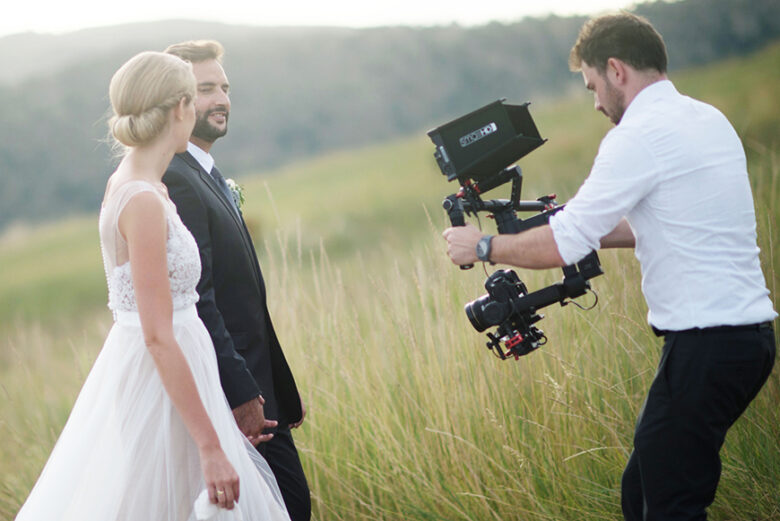
You found a videographer whose work made you cry on a Tuesday afternoon, then the reply to your inquiry is a one-page PDF that reads “Gold Package, $4,200.” What does that actually buy? Eight hours of coverage or six? A four-minute film or a thirty-second teaser? The gap between two quotes at the same price can be enormous, and the only way to compare them is to know what a wedding videography package is supposed to contain in the first place.
This guide breaks down every line you should expect to see, what each piece costs to add or drop, and the questions that separate a fair quote from one that surprises you in month three of editing. Open two real quotes in another tab while you read, and the differences stop hiding.
What a wedding videography package actually includes
A wedding videography package is the bundle of shooting hours, edited deliverables, and usage rights that a videographer sells for a single price. Almost every package combines three things at its core: time on the day, footage captured, and the films delivered afterward. Everything else is negotiable, which is exactly why two PDFs at the same $4,200 can describe wildly different products.
Most full-day packages in the United States run between $2,500 and $6,500 for one experienced shooter. Metro markets like New York, Los Angeles, and the Bay Area push well past $8,000. That price reflects a ratio most couples never see. A single eight-hour wedding generates 30 to 40 hours of editing work, so roughly two thirds of what you pay is the edit suite, not the camera on the day.
A standard mid-tier package usually contains six to eight hours of coverage, one videographer, a highlight film of three to six minutes, and a longer edit of the ceremony and speeches. The cheaper the tier, the more of those pieces fall away. A $1,500 package might hand you four hours and a single highlight reel with no full ceremony at all. Learn that baseline cold, because every quote you read either matches it, beats it, or quietly strips it.
Those usage rights matter more than couples expect. A standard package gives you personal use: you can share the film, post it online, and play it at your tenth anniversary. It does not always let the videographer enter your footage into contests or use it in ads, and it rarely gives you the right to resell or commercially license the film yourself. If a brand ever wants to feature your wedding, that clause is the one you will go hunting for. Read who owns what, and how long the videographer keeps your footage on file.
The coverage tiers and what they really cost
Videographers build packages around hours because hours drive everything downstream. Each extra hour on the day is another hour of audio to sync, b-roll to log, and moments to cut. Here is roughly how the tiers break out in 2026.
- Half-day (4 to 5 hours): $1,200 to $2,500. Covers the ceremony and a slice of the reception. You miss either the morning prep or the late-night dancing.
- Full-day (8 hours): $2,800 to $5,500. The common choice. Prep through to the first hour or two of the reception.
- Extended (10 to 12 hours): $4,500 to $9,000. Getting-ready shots through the last dance, often with a second shooter included.
The number that matters most is the start time. A package billed as “full day” that starts at noon will not capture the bride’s mother zipping the dress or the groom’s hands shaking before the first look. If those moments matter to you, read the start time before you read the price. A videographer who arrives at the venue at 11am for a 4pm ceremony is handing you five hours of buildup footage, and that buildup is what makes a finished film feel like a story instead of a recap.
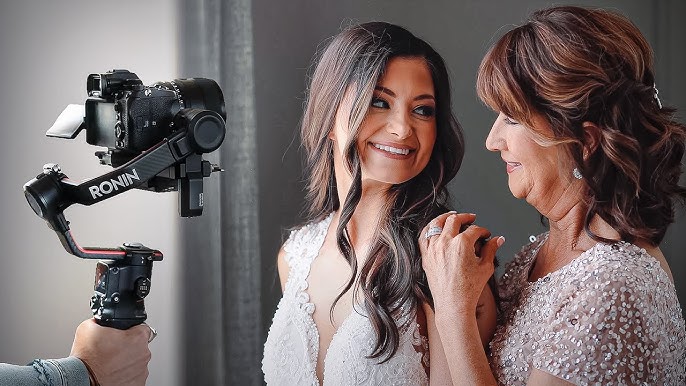
Gear rarely appears on the quote, but it is fair to ask. A working wedding shooter in 2026 is usually running a mirrorless body like a Sony FX3, an A7S III, or a Canon R6 Mark II, with wireless lavalier mics on the officiant and the groom and a recorder patched into the DJ’s board. You are not buying the camera, you are buying clean audio and usable low-light coverage once the reception goes dark. When a quote looks suspiciously cheap, missing audio gear is often the reason.
Overtime is where quotes diverge quietly. Most contracts bill extra hours at $150 to $400 each, and weddings run long more often than they run short. Ask what the rate is and whether it gets decided on the day or agreed up front, because a band playing one more set should never cost you a number you have not seen.
Deliverables: the films you actually receive
Coverage is the input. Deliverables are what you keep, and this is the section couples misread most often. Two packages can both promise “a wedding film” and mean completely different things.
The highlight film is the centerpiece: a three-to-six-minute edit set to music, carrying the best moments and a few lines of audio from the vows or the speeches. This is the piece you share. A good one takes 15 to 25 hours to cut on its own. Below it you will often find a 60-to-90-second teaser, sometimes delivered vertical for Instagram, occasionally turned around the same week.
Here is what a fuller package usually spells out:
- Highlight film: 3 to 6 minutes, the main deliverable.
- Teaser: 60 to 90 seconds, social-ready.
- Full ceremony edit: 10 to 30 minutes, multi-camera, real-time audio.
- Speeches or reception edit: toasts and first dances, lightly cut.
Those long-form pieces are where money hides. A full ceremony edit and a speeches edit are separate deliverables, and plenty of mid-tier packages drop them entirely. That single omission is the biggest reason a $2,000 package and a $4,000 package can look identical on the surface. If you want the whole ceremony, confirm it is named in the contract, not implied by a friendly email.
Resolution and format belong here too. Ask whether you receive 4K or 1080p, whether files arrive by download link or on a physical USB drive, and how long that download link stays live. Most videographers host on a platform like Vimeo or a gallery service for 6 to 12 months, then take it down. Save your files the week you get them. Asking for the raw footage deserves its own conversation, but know that raw clips are almost never part of a standard package, and adding them runs $300 to $1,000.
One deliverable couples forget to ask about is the vertical social cut. A film built to look cinematic on a television gets cropped to nonsense on a phone, so a separate 9:16 version for Reels and TikTok is worth confirming. Some studios include it, many charge $100 to $250, and a few simply hand you a horizontal file and leave the cropping to you. If most of your friends will watch on a phone, that small line item earns its keep.
Add-ons that change the price
The base package is the floor. Most couples spend another 15 to 40 percent on add-ons, and the honest videographers list them as separate line items so you can actually choose.
A second shooter is the most common upgrade, running $500 to $1,200. With one operator, your videographer cannot film the groom’s face and the bride walking the aisle at the same instant. A second pair of hands gives the editor two angles to cut between, and it removes the worst risk in the room: a single camera failing with no backup. For any wedding over 100 guests, price it out before you decline it.
Drone coverage adds $300 to $800, and it only works where the venue permits it and the airspace is legal to fly. A licensed aerial drone videographer gives you the establishing shots of the estate or the coastline that ground cameras simply cannot reach. The catch is real: rain, wind over 20 knots, and restricted airspace will ground a flight on the day. Commercial drone work falls under the FAA’s Part 107 rules, so a pilot near an airport may legally be unable to take off no matter what you paid. Confirm the venue allows it before you add it.
The same-day edit, a short film cut during the wedding and screened at the reception, is the premium add-on. It runs $800 to $2,500 because it means an editor working in a back room for six hours straight, often on a laptop running DaVinci Resolve while the party goes on next door. It lands beautifully when it works. The tradeoff: the day-of cut is rushed by definition, so the polished version still arrives weeks later.
Other line items you will see: a feature-length edit of 20-plus minutes, licensed music beyond the standard library, express turnaround, and a printed USB presentation box. None are essential. All are easier to decline when they sit on the quote as their own number.
What is not included, and the questions to ask
The most expensive surprises hide in the gaps. Travel is the big one. Many packages cover a local radius of 30 to 50 miles, then bill mileage, tolls, and, for destination weddings, flights and a hotel night. A wedding three hours away can add $400 to $1,500 before the camera even powers on. Ask exactly where the free radius ends.
Music licensing is the second gap, and it is a legal issue rather than a courtesy. A videographer cannot legally set your film to the latest chart single, and a film posted with unlicensed music gets muted or pulled from social platforms within days. Reputable shooters pull from catalogs like Musicbed, Artlist, or Soundstripe, which is why your song choices come from a library instead of the radio. If you have a non-negotiable track, raise it early. The answer is usually no, and it is far better to hear that before the edit than after.
Three more things to confirm in writing:
- Turnaround time. Six to twelve weeks is normal. Peak season, June through October, stretches it. Get the number into the contract.
- Backup and insurance. Ask whether the videographer records to dual memory cards and carries liability insurance, which many venues now require before they let a vendor in.
- Revisions. One round of changes is standard. Ask what a second round costs and what counts as a revision versus a full re-edit.
If you are still weighing whether you need film alongside stills at all, the videographer versus photographer question is worth reading before you split the budget. They solve different problems, and most couples who skip one end up regretting it for very different reasons.
How to read a package quote before you sign
Line up two wedding videography package quotes side by side and the comparison gets simple fast. Match the hours first, then the deliverables, then the add-ons, then the gaps. A package that costs $800 less but starts two hours later, drops the full ceremony, and bills travel separately is not cheaper at all. It is a different product wearing the same name.
Vague language is the warning sign. “Full coverage,” “cinematic edit,” and “all the footage” mean nothing without numbers attached. Push for the specifics:
- How many minutes is the highlight film?
- How many cameras and how many shooters?
- What start and end time, written into the contract?
- What resolution, and how is it delivered?
- What is the dollar figure for one more hour?
A videographer who answers those crisply has run enough weddings to know the questions are fair. One who gets defensive is telling you something useful for free.
Payment terms deserve a glance too. Most videographers take a 25 to 50 percent deposit to hold the date, with the balance due a week or two before the wedding. A vendor asking for the full amount up front, months early, is a small flag worth a question. Confirm the cancellation and rescheduling policy in the same breath, because the couples who learned that lesson learned it the hard way in 2020 and 2021.
One last move before you book: watch a full film start to finish, not just the highlight reel on the homepage. The teaser is the trailer. A full ceremony edit shows you whether the audio is clean, the color holds steady, and the cuts survive across twenty minutes instead of three. Browse a few wedding videographers, ask each for one complete delivery from a recent couple, and compare those before you ever compare prices.
The right wedding videography package is the one where every line is named, every gap is priced, and nothing about the wedding day rests on a verbal promise. Before you sign, send one email asking the vendor to confirm start time, deliverables, turnaround, and travel in writing. If the way the booking works reads clearly and the numbers hold up under that email, you have found your shooter.