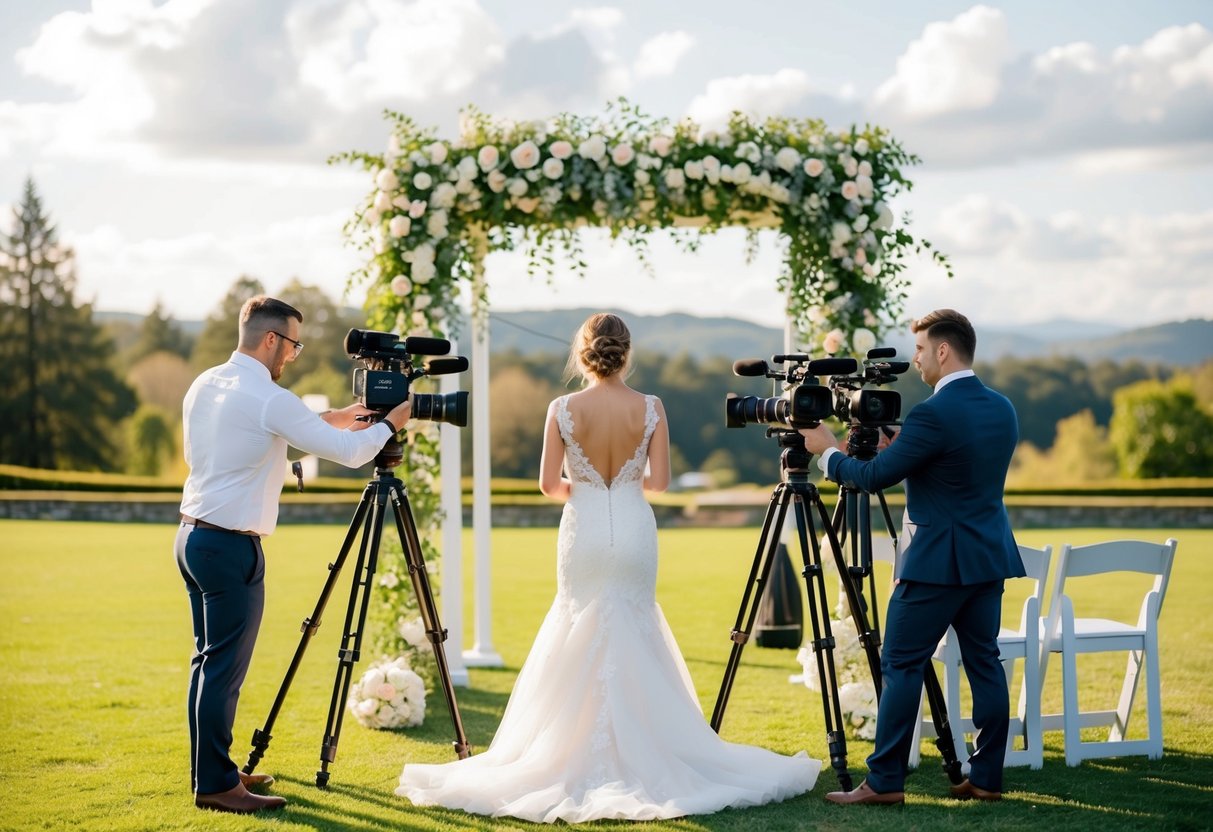
You got engaged in March, the wedding is next October, and someone in a Facebook group just told you the good videographers are “already booked.” Is that true? Or is it pressure to make you put down a deposit you are not ready for? The honest answer sits in the middle. It depends on your date, your region, and how specific your taste is.
Knowing when to book a wedding videographer matters more than most couples realize. Video is one of the last vendors people think about, and one of the first to sell out for popular dates. By the time the venue is locked and the photographer is signed, the calendar has often already moved against you. This guide walks through the real booking windows I see as a working shooter, season by season, plus what actually happens when you wait.
How far in advance should you book?
The short version: 9 to 12 months out for a Saturday in peak season, and 4 to 6 months for an off-season weekday. Those are not arbitrary numbers. A solo videographer can realistically shoot 25 to 40 weddings a year before editing backlog eats them alive. So a single popular Saturday in June might have only a handful of experienced shooters left in your price range three or four months out.
Geography swings these windows hard. In a destination market like Charleston or the Amalfi Coast, the best shooters can be gone 16 to 18 months out for an October Saturday. In a smaller metro with fifty working videographers, you might still land a great one at five months. Before you panic about a timeline, look at how saturated your specific market is, then adjust the numbers up or down from there.
Most full-time videographers I know hit roughly 70 percent of their peak-season bookings between 8 and 14 months before each wedding. The couples who book inside 90 days are usually filling the dates nobody wanted. Or paying a premium for a last-minute scramble. Or settling for whoever answered the email first.

There is a second reason to move early, and it has nothing to do with availability. The videographer you actually want, the one whose three sample films made you cry at your laptop, is a specific person with a specific style. Wait too long and you are not choosing from the same pool. You are choosing from whoever is left. Browsing a directory of wedding videographers a year out gives you the full roster. Browse it eight weeks out and you get the leftovers and the beginners.
When to Book a Wedding Videographer, Season by Season
Not every date carries the same urgency. Treat July and February the same way and you will either stress yourself out for no reason or get burned by a full calendar.
For peak season, roughly May through October across most of the US and Europe, book 10 to 14 months ahead if your heart is set on a particular videographer. Saturdays in September and October are the most competitive slots on the calendar, full stop. Got engaged over the holidays for a fall wedding? You are already in the rush. That is why January is the busiest inquiry month of the year for most studios.
Shoulder season, April and November, usually gives you good options at 6 to 9 months out. Demand softens, but the best shooters still fill Saturdays first. Winter weddings, December through March with New Year’s Eve as the exception, are the most forgiving. Three to 6 months is realistic, and you might even find a Friday or Sunday open at four weeks.
Weekday and Sunday weddings change the math entirely. A Thursday in August can sit wide open three months out while the Saturday two days later sold out a year ago. If your date is flexible, a non-Saturday slot is the single biggest lever you have on both availability and price. It often saves 10 to 20 percent off the weekend rate.
Why the best videographers book out a year ahead
It comes down to capacity. A single cinematic wedding film is 20 to 40 hours of work in something like Premiere Pro or DaVinci Resolve: a highlight reel, a feature edit, color grading, and licensed music from a service like Musicbed. A shooter who books 35 weddings is committing to well over a thousand hours of post, on top of shoot days, consultations, and travel. They cannot say yes to everyone. So they say yes early and then stop.
Experienced videographers also protect their schedule on purpose. Most refuse to shoot two weddings in one weekend. Many block the day after a wedding for offloading footage and backing up to dual SSDs. A shooter charging $3,500 to $6,500 for a full-day package runs a business with a hard ceiling on volume. That ceiling is exactly why their calendar closes months before the cheaper, higher-volume operators fill up. If you want the price side of this, the breakdown of why wedding videography costs what it does lines up directly with these capacity limits.
There is a quieter reason too. Top shooters get much of their work from referrals and from photographers they partner with regularly. Those relationships feed them early bookings, sometimes before a date is even listed publicly. By the time a couple finds them through a cold search, a chunk of the calendar is already spoken for through the back channel. My honest take: the very best videographers in any city are nearly invisible to last-minute couples.
Book the photographer and videographer together or separately?
Most couples book the photographer first, often by a month or two, and only then realize they want video. That order is fine, but it carries a catch. Your favorite photographer and your favorite videographer have to actually like working next to each other, because they will share tight spaces all day. A photographer who hogs the ceremony aisle or blocks the first kiss can wreck your film, and the reverse is just as true.
Book them close together if you can. Ask each whether they have worked with the other, or whether they will hop on a quick call before the day. Some studios offer both services under one contract, which removes the coordination problem entirely. If you go with two separate vendors, confirm both are comfortable with a shot-sharing plan: who owns the center aisle during the processional, who gets the clean angle on the vows, and how they split the reception floor.
Here is a sequence that works. Lock the venue and date. Book whichever of the two you feel strongest about. Then start on the other immediately, while you still have leverage over the date. Waiting three months between the two is how people end up with a photographer they love and a videographer they settled for. Still deciding whether you need both? The question of whether to hire a videographer at all deserves an honest look before you spend.
One coordination detail people forget: audio. Your videographer usually clips a wireless lav mic on the groom or officiant to capture the vows cleanly, often a Rode Wireless GO II or a Sennheiser. If the photographer does not know it is there, you get a shot of that mic on a lapel in every wide photo. A two-minute heads-up between vendors prevents it. Small thing, big difference on the final film.
What happens if you book late?
Late booking is not automatically a disaster, but you trade away choice and sometimes quality. Inside 90 days for a peak Saturday, here is what you are realistically working with: newer videographers building a portfolio, shooters who just had a cancellation, out-of-area people willing to travel for a fee, and the rare pro who happened to have a gap. Some of them are genuinely good. Most of the consistently excellent ones are already gone.

The price picture is mixed. Sometimes a last-minute booking runs cheaper, because a videographer wants to fill an empty date and discounts it. More often, especially in peak season, you pay the same or more for less experience. The supply of good people has dried up, and the remaining pros know it. Rush bookings also compress everything: less time for a pre-wedding call, no engagement shoot, and a faster, more generic edit.
Here is a real one. A couple I talked to last spring had a May Saturday at a popular Hudson Valley barn and started looking for video at eight weeks out. Every studio they wanted was already booked. They ended up flying in someone from three states away, paid a $600 travel and lodging fee on top of the package, and still got a solid film. It worked, but it cost more and burned a week of frantic emails.
If you are genuinely late, move fast and stay flexible. Have your date, venue, and budget ready in the first message. Respond within hours, not days. Be willing to consider a second shooter from an established studio instead of holding out for the lead artist. A strong second shooter or associate from a busy studio often outperforms a solo beginner you found in a panic.
What you need ready before you reach out
A videographer can hold your date once you give them three things, and having them ready turns a two-week back-and-forth into a one-day yes. Lock these down before you start inquiring:
- Your confirmed date and venue, including the city, since travel and timing both affect the quote
- A rough budget range, so you get matched to the right tier instead of wasting everyone’s time
- The coverage you want: ceremony only, full day, or a multi-day event with a rehearsal dinner
With those in hand, the booking moves quickly. Most studios hold a date with a signed contract and a deposit, usually 25 to 50 percent of the package, and the date is not yours until both clear. A verbal “we’d love to book you” holds nothing. I have watched couples lose a date because they sat on the contract for a week while another inquiry came in for the same Saturday.
While you are reading the contract, check four clauses specifically: the deposit amount and whether it is refundable, the delivery window in writing, what happens if the shooter is sick or has an emergency, and who owns the raw footage. A good contract names a backup shooter from a network, or a partial refund if the lead cannot make it. Vague language here is where cheap quotes hide expensive surprises.
Confirm one more thing before signing: the delivery timeline. Peak-season films routinely take 8 to 16 weeks to land, because the editing queue backs up from May through October. Book a popular shooter for a September wedding and your film might not arrive until the new year. That is normal, but it belongs in the contract, not in a surprise email. If a drone is part of your vision, ask early whether your videographer flies it in-house or brings in an aerial specialist, because a licensed drone pilot must hold an FAA Part 107 remote pilot certificate and that adds a second person to coordinate.
When booking early can backfire
Early is almost always better, but two situations call for slowing down. The first is signing before you have actually seen full films. A 60-second Instagram reel is edited down to its best ten seconds. Ask for two or three complete wedding films, start to finish, before you commit. Plenty of couples rush a deposit a year out and only later notice the full-length work is choppy or the audio is muddy.
The second is booking before your plans are firm. If your venue is not confirmed, or your date might shift by a season, a deposit can turn into non-refundable money chasing a moving target. Read the rescheduling and cancellation terms closely. A fair contract lets you move the date once, subject to the videographer’s availability, without losing the deposit. Knowing exactly when to book a wedding videographer is partly about acting early, and partly about not acting on a date that is not real yet.
Here is the practical rule I give couples, and it is the real answer to when to book a wedding videographer. The week your venue and date are signed, start reaching out. You do not need every other vendor sorted first. Pull up a shortlist, request full films, and ask about your exact date. If you want help comparing real working pros in your area, see how the directory matches couples with videographers and send three inquiries today rather than three next month.